
Setting Affiliate Commission Percentages That Work

Affiliate commissions look simple on the surface, pick a percentage and start recruiting partners.
In reality, deciding how to decide affiliate commission percentage requires balancing margins, partner incentives, and long-term profitability.
The right commission is rarely just a number. It’s a structure built around how your products sell, what each order actually costs, and how affiliates promote your brand.
If you want a commission model that stays profitable and attractive to affiliates, focus on these fundamentals:
- Commission based on contribution margin
- Choose structure before picking percentage
- Higher payouts for new customers
- Strategic bonuses for top affiliates
- Incentives aligned with product margins
- Test and refine commissions over time
At iDevAffiliate, businesses use flexible commissioning structures and automated tracking tools to manage commissions while keeping payouts tied to real order outcomes.
Understanding how these pieces fit together will make it far easier to set commission rates that affiliates trust and your business can sustain.
Setting Affiliate Commission Percentages Starts With Margin Clarity
Instant account set up. All features unlocked in base plan. Professional onboarding included.
Create Your Affiliate Program
Deciding how to decide affiliate commission percentage should start with understanding the economics behind each sale.
Commission is not just a marketing incentive. It is part of your acquisition cost, and it must fit within what your margins can realistically support.
Once that financial foundation is clear, businesses can begin choosing commission structures, incentives, and optimization strategies that keep affiliate programs both competitive and sustainable.
Gross Margin vs Contribution Margin
Gross margin shows the difference between revenue and product cost, but it does not represent what a business actually keeps from each order.
When deciding how to decide affiliate commission percentage, contribution margin is more useful because it includes additional costs like shipping, payment fees, and returns.
These expenses directly affect how much commission a business can realistically afford to pay while keeping each affiliate-driven sale profitable.
Shipping, Fees, and Returns
Every ecommerce order carries additional costs beyond the product itself. Shipping expenses, payment processing fees, and refund rates can significantly reduce the profit remaining after a sale.
Commission structures must account for these variables to ensure payouts remain sustainable as affiliate sales grow.
New Customers vs Returning Customers
Affiliate-driven sales do not always deliver equal value to a business.
A first-time customer often represents long-term revenue potential, while returning customers may have purchased again anyway.
Commission structures that prioritize new customer acquisition usually create stronger long-term program value.
Margin Bands Across Products
Most product catalogs include items with widely different profit margins. Applying one commission percentage across everything can create profitability issues.
Grouping products into margin bands allows businesses to protect low-margin items while offering stronger incentives on higher-margin products.
Maximum Commission Guardrails
Clear payout limits help prevent unusual orders from becoming unprofitable. Discounts, coupon stacking, or unexpected fulfillment costs can shrink margins quickly.
Setting maximum commission guardrails ensures payouts stay within sustainable boundaries while still allowing competitive incentives for affiliates.
Define a Target CPA Limit
Affiliate commissions function as a customer acquisition cost.
Businesses should first define how much they are willing to spend to acquire a customer, then structure commission percentages within that limit.
This approach keeps affiliate marketing aligned with overall profitability goals.
With margin clarity in place, the next step is choosing a commission structure that fits your products, pricing model, and affiliate promotion style.
Helpful Resource → Automating Affiliate Programs Without Losing Control
Understanding Affiliate Commission Structures (And When to Use Each)
Choosing how to decide affiliate commission percentage is only part of the equation. Businesses also need a structure that matches how their products are priced and how affiliates promote.
1. Percentage Commissions: The Standard Ecommerce Model
Most ecommerce programs use percentage-based commissions because they scale naturally with order value and remain easy for affiliates to understand.
- Commission scales with order value
- Works well with varied cart sizes
- Common for ecommerce product catalogs
- Encourages promotion of higher-value purchases
Percentage commissions keep affiliate payouts proportional to the size of the sale.
For stores with relatively stable margins, this structure usually provides the simplest and most predictable model.
2. Flat Commissions: Fixed Payouts Per Sale
Flat commissions provide a fixed payout for every qualifying action, making acquisition costs easier to forecast and track.
- Fixed payout per conversion
- Works well with single-product offers
- Useful for leads or trial signups
- Easier cost forecasting per sale
Flat payouts simplify budgeting and commission explanations. This model works best when pricing is consistent and affiliates are typically promoting the same offer.
3. Tiered Commissions: Rewarding High-Performing Affiliates
Tiered commissions allow businesses to increase payouts for affiliates who consistently generate higher sales or stronger results.
- Higher payouts after sales thresholds
- Encourages consistent promotion efforts
- Common in mature affiliate programs
- Rewards quality partners over time
This structure motivates affiliates to scale their efforts while protecting the base commission. It allows businesses to reward performance without increasing payouts across the entire program.
4. Recurring Commissions: Common in Subscription Businesses
Recurring commissions are typically used by subscription-based businesses where revenue is generated through ongoing payments.
- Common in SaaS and subscription models
- Aligns incentives with customer retention
- Creates long-term earning potential
- Requires strong lifetime value margins
Recurring payouts align affiliate incentives with long-term customer value. They work best when retention and lifetime value can comfortably support ongoing commissions.
5. Hybrid and Product-Level Commissions: Flexible Commission Control
Businesses with varied product margins often combine multiple commission structures to maintain flexibility and protect profitability.
- Mix percentage, flat, or recurring payouts
- Adjust rates for specific product categories
- Useful for catalogs with varied margins
- Helps steer promotion toward strategic items
Hybrid structures give businesses more control over how commissions behave across different products. When kept simple, they help balance competitiveness with long-term sustainability.
Once the right commission structure is in place, the next step is knowing when and where strategic flexibility can strengthen your affiliate program.
Helpful Resource → Choosing the Best Affiliate Software for Growth
When It Makes Sense to Be Flexible With Affiliate Commissions
Once the base commission structure is established, businesses sometimes benefit from being flexible with certain affiliates or situations.
The key is increasing payouts only when affiliates are clearly contributing additional value to the program.
1. Reward Affiliates Who Consistently Drive Reliable Sales
Some affiliates deliver stable, high-quality traffic that converts consistently and produces low refund rates.
In these cases, slightly higher commissions can strengthen long-term relationships while encouraging those partners to continue prioritizing your products over competing offers.
2. Offer Higher Commissions for New Customer Acquisition
New customers typically create more long-term value than returning buyers, which makes them worth a higher acquisition cost.
Offering stronger commissions for first-time purchases helps affiliates focus on bringing new audiences rather than simply capturing existing customers.
3. Increase Payouts for Strategic or High-Margin Products
Not all products contribute equally to profitability.
When certain items have stronger margins or are strategically important, businesses can offer higher commissions to encourage affiliates to focus their promotional efforts on those specific products or categories.
4. Use Temporary Commission Bonuses During Campaigns
Short-term promotions such as product launches, seasonal campaigns, or inventory pushes are common opportunities to increase affiliate payouts.
Temporary bonuses motivate affiliates to promote aggressively during specific windows without permanently raising commission costs.
5. Offer Higher Rates to Proven Top Partners
As affiliate programs mature, some partners consistently outperform others in both volume and quality.
Providing these top affiliates with higher commission tiers or special terms helps retain valuable partnerships while maintaining sustainable base rates for the rest of the program.
But, strategic flexibility is only the starting point. The real improvement comes from testing commission changes and refining them over time.
Testing and Optimizing Affiliate Commission Rates Over Time
Once you choose a commission structure, the next step is improving it gradually.
Commission rates should not remain static forever. Instead, businesses should refine them through small, controlled adjustments that protect margins while helping affiliates perform better.
1. Test Commission Changes One Adjustment at a Time
Commission optimization works best when changes are tested carefully.
Adjusting several variables at once makes it difficult to understand what actually improved performance. Start by keeping the commission structure stable while testing one specific adjustment.
- Increase commission for a product category
- Test flat payouts on specific offers
- Introduce short-term bonus incentives
Small, isolated tests make results easier to interpret. Clear testing also prevents sudden rule changes that might confuse affiliates.
2. Define Clear Metrics Before Changing Commission Rates
Commission changes should always be tied to measurable outcomes.
The quality of those measurements depends entirely on how conversions are tracked.
If attribution is incomplete, commission decisions are based on partial data. Cookie-only tracking can miss returning customers or cross-device purchases, which leads to undercounted performance for some affiliates and over-crediting for others.
More advanced tracking methods, such as email-based attribution, help ensure commission adjustments are based on a more complete view of affiliate-driven revenue.
Without defined metrics, businesses often react to short-term spikes instead of long-term profitability. Decide what success looks like before adjusting payouts.
- Total affiliate-driven revenue
- Profit after commission payouts
- Refund or reversal rates
- Average order value trends
Clear metrics keep commission decisions grounded in performance.
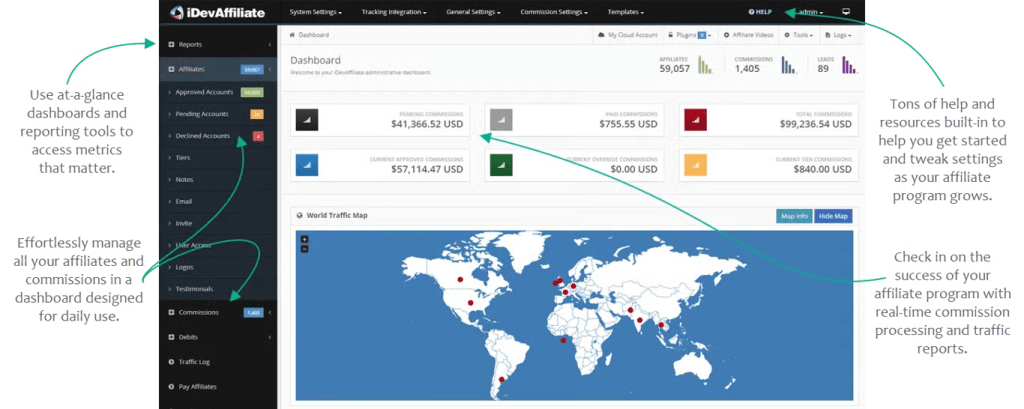
Reliable reporting tools, such as the dashboards available in iDevAffiliate, also help businesses verify these metrics before making payout adjustments.
3. Evaluate Affiliate Performance by Partner Type
Different affiliates generate very different traffic and customer behavior.
Understanding these differences helps businesses decide where higher commissions make sense.
This only works if attribution is consistent across different customer journeys. When tracking breaks, performance comparisons between affiliate types become unreliable.
Systems that go beyond cookie-based tracking can help maintain more accurate performance data across sessions and devices.
Segment affiliates by promotion style to compare performance accurately.
- Content and review publishers
- Coupon and deal platforms
- Paid traffic or PPC affiliates
- Influencer or social affiliates
Segmenting affiliates prevents overpaying across the entire program. It also highlights which partners truly justify higher commission incentives.
4. Use Tiered Incentives to Encourage Long-Term Growth
Tiered incentives help optimize commissions without raising payouts for every affiliate. Instead, higher rewards are tied to proven performance.
This approach motivates affiliates to grow their results over time.
- Higher payouts after sales milestones
- Monthly or quarterly performance tiers
- Bonus incentives for campaign goals
Tiered incentives maintain a sustainable base commission. At the same time, they create clear opportunities for top affiliates to earn more.
5. Monitor Refunds, Cancellations, and Irregular Activity
Commission adjustments should always be based on reliable data.
Refunds, cancellations, and suspicious activity can distort performance numbers if they are ignored. Regular reporting reviews help maintain accuracy.
- Review reversal patterns regularly
- Identify unusual conversion timing
- Flag potential self-referrals
Accurate data keeps commission decisions fair. It also ensures that higher payouts reward genuine performance.
6. Automate Commission Adjustments and Tracking
As affiliate programs grow, manual adjustments become difficult to manage. Automating commission tracking helps ensure accuracy as changes are introduced.
Automation also keeps reporting consistent for affiliates.
- Create commissions when orders complete
- Remove commissions on cancelled orders
- Apply product-level commission rules
iDevAffiliate makes this process easier by automatically tying commissions to order status and applying commission rules consistently.
This keeps commission optimization structured while maintaining transparency for affiliates.
Commission Structure Mistakes Businesses Should Avoid

Even well-designed affiliate programs can run into problems when commission rules are not clearly defined.
Most issues do not come from the percentage itself but from unclear policies, inconsistent enforcement, or overlooked operational details.
- Paying Commissions on Refunded Orders: Commissions should only apply to completed sales. Paying on cancelled or refunded orders quickly inflates costs and undermines profitability.
- Ignoring Self-Referrals: Allowing affiliates to earn commissions on their own purchases or household orders creates payouts without real customer acquisition.
- Uncontrolled Coupon Sharing: Affiliate coupons that spread across public deal sites can override referral links and cause commissions to be paid to the wrong partner.
- Last-Click Attribution Confusion: Affiliates who appear at the final checkout step may receive credit for demand they did not actually create.
- Single Rate Across All Products: Applying one commission percentage to every SKU can overpay on low-margin products and discourage promotion of higher-margin items.
- Unclear Bonus Rules: Vague performance bonuses create confusion and disputes when affiliates are unsure how rewards are calculated or when they apply.
When these common mistakes are addressed early, commission structures remain predictable for both businesses and affiliates.
Clear rules and consistent tracking make affiliate programs easier to scale without creating unnecessary disputes.
Bottom Line: Setting Affiliate Commission Percentages
Instant account set up. All features unlocked in base plan. Professional onboarding included.
Create Your Affiliate Program
Choosing how to decide affiliate commission percentage is rarely about copying industry averages.
Sustainable programs start with margin clarity and build commission structures that affiliates understand and businesses can afford.
Commission strategy is ultimately about balance. A strong affiliate program usually relies on a few practical principles:
- Margin-aware payouts: Commission percentages should reflect contribution margin, fulfillment costs, and refund risk.
- Simple commission structures: Affiliates promote more confidently when payout rules remain clear and predictable.
- Strategic flexibility: Higher commissions make sense when affiliates bring new customers, promote high-margin products, or consistently drive quality sales.
- Reliable tracking and automation: iDevAffiliate help manage percentage, flat, tiered, and product-level commissions while adjusting payouts when orders change.
Together, these elements create affiliate programs that stay profitable while keeping partners motivated to promote consistently.
If you want to implement these commission strategies without manual complexity, start your free trial of iDevAffiliate and build a more reliable, scalable affiliate program.
Frequently Asked Questions (FAQS)
You may also like

How to Set Up an Affiliate Program on BigCommerce

How to Set Up an Affiliate Program on WooCommerce

How to Set Up an Affiliate Program on Shopify

First Steps: 6 FREE Marketing Ideas For Your New Affiliate Program
Create Your Affiliate Program
- Unlimited Affiliates
- Unlimited Commissions
- Built-In SEO Links
- Social Media Sharing
- Affiliate Program Directory
