
How to Monetize Affiliate Programs Without Losing Profit

Affiliate programs often look simple on the surface. Add affiliates, set commissions, and watch revenue grow.
But businesses quickly discover the real question is how do you monetize affiliate programs without losing profit along the way.
Affiliate revenue becomes predictable only when the underlying system is designed correctly from the beginning. That usually means focusing on a few fundamentals:
- Commission structures that match real product margins
- Tracking systems that credit the right affiliate every time
- Partners whose audiences actually match your ideal customers
- Simple payout rules affiliates can easily understand
- Program systems that scale without constant commission increases
If you’re building or improving an affiliate program, tools like iDevAffiliate make it easier to manage these mechanics, handling tracking, commissions, reporting, and affiliate dashboards in one place.
Because once these systems are set up correctly, affiliate programs become far easier to manage and scale.
Understanding how each piece fits together, from margin planning to affiliate recruitment, matters.
It often determines whether an affiliate program barely breaks even or becomes a reliable revenue channel over time.
Foundation for Profitable Affiliate Programs
Instant account set up. All features unlocked in base plan. Professional onboarding included.
Create Your Affiliate Program
Before asking how do you monetize affiliate programs, it helps to start with the fundamentals.
Affiliate revenue rarely becomes reliable by accident. It comes from setting commission rules, pricing logic, and payout expectations that your margins can actually support.
When the financial structure is clear from the beginning, businesses can recruit affiliates confidently and scale promotion without constantly adjusting payouts.
Clear Profit Margins
The starting point for monetizing affiliate programs is understanding the real profit on each sale. True margin includes discounts, payment fees, shipping costs, and return rates, not just the listed product margin.
When businesses calculate what remains after those costs, they know exactly how much commission they can afford to pay without damaging profitability.
Realistic Commission Rates
Commission rates should reflect the economics of the products being promoted. Not every item can support the same payout without turning profitable orders into break-even transactions.
Setting realistic rates early keeps the program stable and prevents situations where commissions need to be reduced after affiliates are already promoting the offer.
Product-Level Commission Rules
Different products often carry different margins, which means they should not always share the same commission rate.
Assigning product-specific commissions allows businesses to reward affiliates more on profitable items while protecting margins on lower-profit products.
This approach keeps the affiliate program sustainable even when product pricing varies across the catalog.
First-Order and Repeat Purchase Value
Many businesses earn most of their revenue after the first purchase through renewals, upgrades, or repeat orders.
Separating commission logic for first-time customers and repeat buyers helps protect margins while still rewarding affiliates for bringing new customers.
This structure makes it easier to balance acquisition costs with long-term customer value.
Simple and Predictable Payout Models
Affiliate programs perform best when payout rules are simple and easy to understand.
Clear commission structures reduce confusion for affiliates and prevent disputes over how earnings are calculated.
Predictable payouts also help affiliates plan their promotion strategy because they know exactly how their efforts translate into revenue.
Consistent Commission Policies
Consistency is one of the most important parts of a profitable affiliate program.
Once commission rates and payout rules are established, they should remain stable so affiliates can promote with confidence.
Well-documented policies prevent confusion and create a program structure that partners can trust over the long term.
When these fundamentals are in place, businesses move from guessing about payouts to running a program built on predictable economics.
The next step is building the systems that support growth; clear commission structures, reliable tracking, and stronger affiliate partnerships.
Building and Scaling a Profitable Affiliate Program
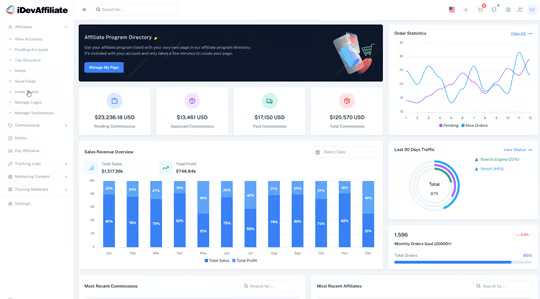
Once the foundations of an affiliate program are in place, the focus shifts to building systems that keep revenue predictable.
Monetizing affiliate programs successfully requires clear commission structures, reliable tracking, strong partner relationships, and consistent performance management.
When these pieces work together, businesses can grow their affiliate channel without constantly increasing commissions or creating operational complexity.
1. Commission Structures Affiliates Will Promote
A well-designed commission structure makes it easy for affiliates to understand how they earn and what actions drive higher payouts.
Clear payout rules help affiliates promote with confidence while protecting the program’s profitability.
- Product-level commissions align payouts with varying product profit margins.
- Performance-based tiers reward affiliates generating consistent verified sales.
- Time-bound bonuses boost promotion during campaigns without permanent increases.
- Clear coupon code rules prevent conflicts with referral link attribution.
iDevAffiliate allows businesses to configure product-level commissions, tier structures, coupon attribution, and bonus incentives directly inside the platform.
When commission rules are simple and transparent, affiliates can focus on promotion rather than guessing how their earnings are calculated.
2. Reliable Tracking and Attribution Systems
Accurate tracking ensures affiliates receive proper credit for the customers they refer.
Without reliable attribution, programs quickly face disputes, lost commissions, and uncertainty around which promotions are actually working.
- Referral links track customer journey from click to purchase.
- Coupon codes attribute sales when referral links are not used.
- Multiple tracking methods reduce attribution gaps across devices.
- Order-status triggers prevent payouts on cancelled or refunded purchases.
iDevAffiliate supports referral link tracking, coupon code attribution, and email-based tracking inside one system.
With built-in order-status commission triggers, businesses can ensure commissions are created only after verified orders.
3. Recruiting Affiliates Who Generate New Customers
The success of an affiliate program depends on working with partners who can reach the right audience.
Recruiting affiliates strategically helps ensure the program generates incremental revenue rather than simply capturing existing demand.
- Affiliates whose audience closely matches your ideal customer profile.
- Quality-focused recruitment screens applicants before program approval.
- Structured onboarding explains tracking tools and promotion guidelines.
- Marketing assets help affiliates promote products faster and better.
Providing affiliates with a structured dashboard and ready-to-use tracking links also helps partners start promoting faster while reducing common tracking errors.
4. Scaling Affiliate Revenue Through Program Optimization
Once affiliates begin generating traffic, the next stage is improving performance through structured program management.
Growth often comes from refining the system rather than increasing commissions.
- Performance targets track revenue, margins, and verified new customers.
- Continuous offer testing improves conversion rates without raising payouts.
- Fraud checks monitor suspicious patterns while protecting legitimate affiliates.
- Clear disclosure guidance prevents compliance issues in affiliate promotions.
With iDevAffiliate, businesses can monitor affiliate performance through centralized reporting, manage commissions, and review activity logs from a single admin dashboard.
This structured visibility makes it easier to scale affiliate revenue while keeping payouts and operations under control.
With these systems in place, affiliate programs become easier to manage and scale over time.
However, even well-structured programs can lose profitability if a few common operational mistakes are overlooked.
Common Affiliate Monetization Mistakes to Avoid

Even when businesses understand how to monetize affiliate programs, a few operational mistakes can quietly reduce profitability.
Avoiding these early helps keep commissions sustainable, tracking reliable, and affiliate relationships stable as the program grows.
1. Ignoring Real Profit Margins
One of the most common mistakes is setting commissions without calculating true product margins.
Discounts, shipping costs, payment processing fees, and returns all reduce the profit available for payouts.
When commission rates are based on optimistic margins, businesses eventually have to reduce payouts or limit promotions, which can damage affiliate trust.
2. Using One Commission Rate for Every Product
Not all products generate the same profit, yet many programs apply one global commission rate across the catalog. This approach often leads to overpaying on low-margin items.
Product-level commission rules help protect margins while still rewarding affiliates for promoting higher-profit products.
3. Recruiting Too Many Low-Quality Affiliates
A large affiliate list does not always translate into meaningful revenue. Programs that approve every applicant often attract coupon sites or inactive partners who generate little incremental value.
Focusing on fewer affiliates with audiences that match the ideal customer usually leads to stronger and more predictable results.
4. Weak Tracking and Attribution Setup
Unclear attribution rules create confusion about which affiliate should receive credit for a sale. When tracking systems fail or commissions appear inconsistent, disputes can quickly follow.
Reliable tracking methods, order-status validation, and clear attribution rules help prevent these issues before they affect payouts.
5. Complicated Commission and Payout Rules
Affiliate programs sometimes introduce overly complex commission structures that are difficult for partners to understand. When payout rules are unclear, affiliates hesitate to promote the offer.
Keeping commission structures simple and well documented makes it easier for partners to participate confidently.
6. Changing Commission Policies Too Frequently
Frequent changes to commission rates or attribution policies can undermine trust in the program.
Affiliates often invest time creating content, and sudden rule changes can discourage further promotion.
Stable policies allow affiliates to plan their promotion strategy while keeping the program predictable for both sides.
The Bottom Line: Turning Affiliate Programs Into Reliable Revenue
Instant account set up. All features unlocked in base plan. Professional onboarding included.
Create Your Affiliate Program
Monetizing affiliate programs successfully is rarely about paying the highest commissions.
It comes from building a system where commissions match margins, tracking is reliable, and affiliates clearly understand how they earn.
When those foundations are in place, businesses can grow their affiliate channel without constantly adjusting payouts or fixing attribution disputes.
For businesses that want to run affiliate programs with predictable mechanics, iDevAffiliate supports that process through features such as:
- Affiliate Tracking Software: Track referral links, coupon codes, and email-based attribution so every sale is credited accurately.
- Flexible Commission Management: Configure product-level commissions, tiered payouts, and performance bonuses that reflect real product margins.
- Affiliate Portal and Reporting: Provide affiliates with a branded dashboard where they can access links, monitor performance, and track commissions without constant support requests.
Together, these systems create the structure affiliate programs need to grow sustainably, turning partner promotion into a long-term revenue channel instead of a short-term experiment.
Start your free trial of iDevAffiliate and build a more reliable, profitable affiliate program today.
Frequently Asked Questions (FAQS)
You may also like

How to Set Up an Affiliate Program on BigCommerce

How to Set Up an Affiliate Program on WooCommerce

How to Set Up an Affiliate Program on Shopify

First Steps: 6 FREE Marketing Ideas For Your New Affiliate Program
Create Your Affiliate Program
- Unlimited Affiliates
- Unlimited Commissions
- Built-In SEO Links
- Social Media Sharing
- Affiliate Program Directory
