
Setting a Fair Cookie Duration for Your Affiliate Program

Cookie duration is the rule that decides who gets paid in your affiliate program. If your credit window doesn’t match how customers actually buy, attribution breaks down fast.
While “cookie duration” is the common term, it’s really part of a broader tracking duration.
Modern affiliate programs still use cookies, but they also rely on other identifiers like IP address, email tracking, and coupon usage to maintain attribution beyond a single browser session.
Here’s what matters most:
- Cookie (tracking) duration defines your credit window: It controls how long an affiliate can earn commission after a click.
- Short windows under-credit partners: Research-driven buyers often convert days later.
- Long windows increase attribution risk: Overlapping clicks and coupon sites can capture unintended commissions.
- Attribution must match reporting: If dashboards don’t reflect your policy, disputes follow.
- Software determines enforcement: Settings, cart integrations, coupon logic, and fraud tools must align.
If you’re running your own affiliate program, the platform determines how well attribution holds up.
With iDevAffiliate, you control cookie duration, connect 150+ carts, add coupon commissioning, and apply fraud safeguards, keeping reporting defensible and affiliate relationships stronger without relying on third-party networks.
And once you understand how those pieces connect, you start building your program with far more clarity and confidence.
Understanding Cookie Duration and Tracking in Affiliate Marketing
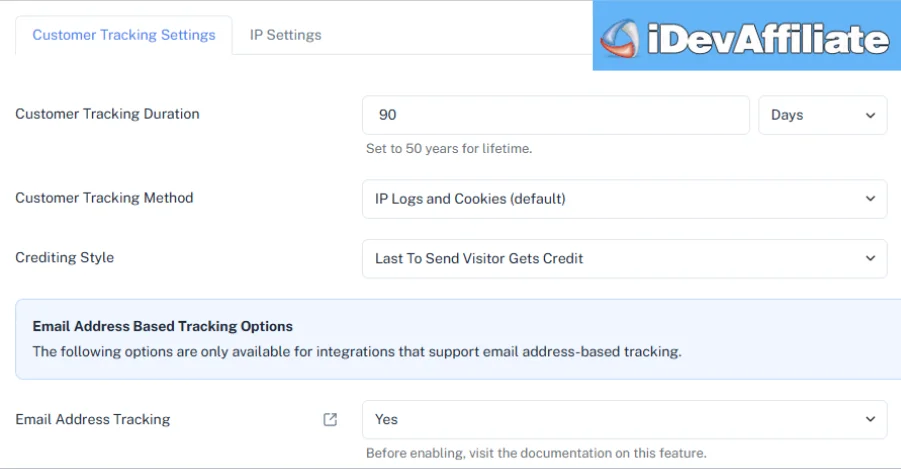
Before you decide what cookie duration should be, you need to understand what cookies actually do inside an affiliate program. They are not just technical artifacts.
They are the mechanism that connects an affiliate’s effort to a future commission.
At the same time, it’s important to understand that what’s often called “cookie duration” is part of a broader tracking duration.
Modern affiliate platforms still use cookies, but they don’t rely on them alone. Attribution can also be supported through identifiers like IP address, email tracking, and coupon usage.
That means your cookie duration is really defining how long affiliate attribution remains active across your tracking system, not just within a browser cookie.
Cookies Identify the Referral Source
A cookie in affiliate marketing is a small data file stored in a visitor’s browser after they click an affiliate link.
It allows your affiliate tracking software to recognize that the visitor came from a specific affiliate, even if they leave and return later within the allowed window.
Without this identifier, your system would see returning visitors as completely new traffic. For affiliates, that cookie is the bridge between the click they generated and the sale that may happen later.
Cookies Enable Delayed Conversions
Most buyers do not purchase immediately after clicking a referral link.
They compare options, read reviews, check prices, and return when they are ready to buy. Cookies make this delayed behavior trackable.
If the visitor comes back before the tracking duration expires, your software can still credit the affiliate according to your attribution rules.
Cookies Support Fair Commission Attribution
Affiliate marketing depends on clear attribution.
Cookies create the technical record that supports your commission logic, whether you use last-click, first-click, or another model.
When attribution is consistent and predictable, affiliates trust the program. When it is unclear or unreliable, disputes increase and confidence declines.
Cookies Power Performance Reporting
Cookies do more than trigger commissions. They also feed your reporting dashboards with data about clicks, return visits, and conversion timing.
This visibility helps you understand which affiliates influence buying decisions and how long your sales cycle actually is.
Accurate cookie tracking creates the technical foundation of your affiliate program.
But the length of time that tracking remains active, your cookie (tracking) duration, is what ultimately determines who gets paid and how your numbers are reported.
Now let’s look at how that single setting reshapes commissions, affiliate trust, and performance data across your entire program.
How Cookie Duration and Tracking Duration Affect Commissions and Reporting

Once you understand what cookies do, the next step is understanding how cookie duration reshapes payouts.
This is where attribution policy directly impacts affiliate trust, commission totals, and reporting clarity.
Last-Click Credit Within the Active Window
In most in-house affiliate programs, cookie duration defines who gets paid inside a specific timeframe. It sets the boundary for last-click attribution and commission eligibility.
- Last tracked click receives commission credit
- Window determines which click qualifies
- Earlier referrals lose priority inside window
- Attribution resets with new affiliate click
This duration isn’t just a setting, it becomes your program’s default payout rule.
Short Windows Can Under-Credit Affiliates
When the tracking window is too tight, buying behavior and credit rules fall out of sync. Affiliates who introduce buyers early may not receive commissions.
- Buyers often convert after multiple visits
- Content affiliates drive delayed purchasing behavior
- Expired tracking removes valid referral credit
- Reports show clicks without matching commissions
Short windows favor impulse purchases. They rarely reflect longer research-driven buying cycles.
Long Windows Can Over-Attribute Sales
Extending the attribution window feels generous, but it shifts attribution risk. Longer durations increase the chance of credit overlap.
- Repeat visits count as affiliate-driven
- Late-funnel coupon traffic captures commissions
- Organic return traffic may appear affiliate-based
- Overlapping referrals increase dispute potential
Long duration is a policy choice. It must align with real contribution, not perception.
Reporting Metrics Shift After Duration Changes
Changing your cookie duration redefines what counts as affiliate-attributed revenue. Even without traffic changes, your numbers will move.
- Commission totals increase or decrease
- EPC shifts across affiliate segments
- Conversion rates realign overnight
- Performance comparisons require policy context
Treat duration updates as structural changes. Clear documentation prevents confusion and protects affiliate trust.
Cookie duration does more than influence individual payouts, it reshapes how your entire affiliate program performs on paper and in practice.
To protect both revenue and relationships, the next step is choosing a duration that aligns with how your customers buy and how your partners promote.
Choosing the Right Cookie Duration and Tracking Window for Your Affiliate Program
Instant account set up. All features unlocked in base plan. Professional onboarding included.
Create Your Affiliate Program
For businesses running in-house affiliate programs, cookie duration is not just a technical configuration. It is a revenue policy that affects commissions, reporting accuracy, and partner confidence.
Setting it correctly protects margins while keeping attribution fair and predictable.
Align Duration With Your Sales Cycle
A defensible cookie (tracking) duration reflects how your customers actually buy. If your typical buyer compares options over several days, a short tracking window under-credits affiliates.
If purchases happen quickly, an extended duration can inflate attribution beyond meaningful influence and distort performance reporting.
Support Promotional Timelines Without Attribution Gaps
Your tracking window should match how affiliates promote your products across launches, campaigns, and evergreen content.
When attribution expires mid-promotion, reporting inconsistencies increase and partners question tracking.
A stable duration policy prevents unnecessary disputes and maintains predictable commission logic.
Manage Cross-Device and Offline Attribution Risk
Modern buyers switch devices, clear cookies, and interact with brands across multiple touchpoints. Extending cookie duration alone will not solve these gaps.
Businesses should pair traditional cookie tracking with additional attribution safeguards such as coupon code commissioning and email-based customer tracking.
These methods preserve the affiliate relationship even when browser-based tracking is lost.
Document and Verify Attribution Rules Inside Your Platform
Clear rules reduce disputes more effectively than generous windows.
Businesses should define last-click logic, coupon overrides, return policies, and fraud safeguards in plain terms.
With iDevAffiliate, cookie (tracking) duration can be configured directly in the admin dashboard and validated through integrated order tracking before scaling recruitment.
Separate Attribution Windows From Commission Structures
Cookie duration determines how long initial credit remains valid.
Lifetime or recurring commissions determine how long payouts continue. Blending the two creates policy confusion.
Businesses should define a clear tracking window, then structure renewals or recurring rewards separately through commission rules.
When cookie duration aligns with your real sales cycle, promotional structure, and commissioning rules, reporting becomes defensible and disputes decrease.
Why the Right Affiliate Software Determines Attribution Accuracy
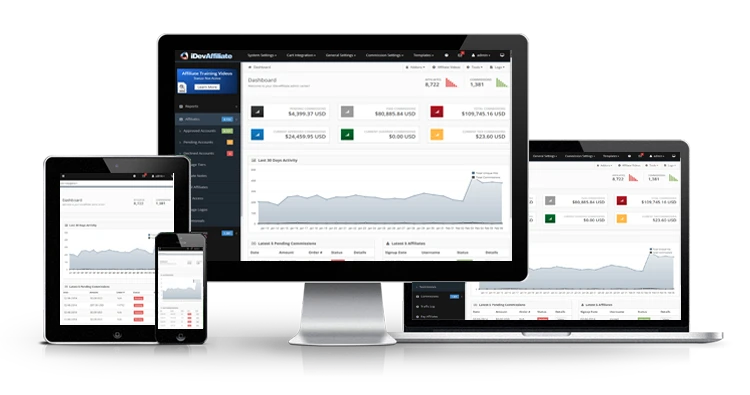
Cookie duration in affiliate programs is not just a setting.
It is a financial decision that directly affects who gets paid, how reports look, and how affiliates perceive your program.
For businesses running in-house affiliate programs, the right software is what turns cookie duration from a theoretical policy into a controlled, enforceable system, across multiple tracking methods, not just browser cookies.
Clear and Accessible Control Over Tracking Duration
If you cannot easily find and adjust your cookie duration, you are not fully managing attribution. Businesses need direct visibility into how long referrals remain eligible for commission.
Platforms like iDevAffiliate allow administrators to configure cookie duration inside the tracking settings and align it with commission rules.
That clarity reduces disputes and prevents accidental overpayment or under-crediting.
Accurate Order and Cart Integration
Cookie duration only works if your system correctly connects clicks to confirmed purchases. Without reliable cart integration, attribution breaks, even if the tracking window is set properly.
Strong affiliate software integrates directly with your shopping cart, ensuring conversion events trigger commissions automatically.
iDevAffiliate’s 150+ cart integrations help businesses connect attribution rules to real transaction data without manual reconciliation.
Persistent Customer Attribution Beyond Cookies
Cookies track browser sessions, but customer relationships often extend beyond a single session or device.
Email-based tracking strengthens attribution by linking the affiliate referral directly to the customer identity once a conversion occurs.
When customers return later using the same email address, affiliate attribution can remain intact according to the program’s rules.
This protects legitimate referrals that might otherwise disappear due to browser behavior alone.
Transparent Reporting That Matches Attribution Rules
Attribution policies must match reporting. If affiliates see numbers that do not reflect your written cookie duration rules, trust erodes quickly.
The right platform ensures both admin dashboards and affiliate portals display consistent tracking data.
When reporting mirrors policy, conversations shift from disputes to performance improvement.
Flexible Commission and Coupon Attribution Logic
Cookie-based tracking alone cannot cover every buying scenario.
Device switching, offline mentions, and delayed conversions require structured commission logic.
Software that supports coupon code commissioning alongside cookie tracking allows businesses to credit partners fairly without stretching cookie duration beyond what is defensible.
Built-In Fraud Protection for Attribution Integrity
Longer cookie durations increase exposure to opportunistic click behavior. Without fraud detection tools, attribution windows can be manipulated.
Affiliate platforms should include safeguards that monitor suspicious click patterns and enforce commission rules consistently.
When cookie duration, integrations, reporting, and fraud tools operate together, businesses maintain control, and scale without attribution chaos.
Why Email-Based Tracking Protects Affiliate Attribution
Cookie tracking connects clicks to commissions but is limited to the browser. It can break when users switch devices, clear data, or return later.
Email-based tracking fixes this by linking attribution to the customer’s identity, preserving the affiliate relationship beyond a single session or device.
This approach protects attribution in several ways:
- Cross-Device Purchases: Customers often research on mobile but purchase later on desktop. Email-based tracking preserves attribution even when cookies cannot follow the journey.
- Long Buying Cycles: Research-driven purchases may take days or weeks. When the customer eventually buys using the same email, the original affiliate relationship can still be recognized.
- Customer Lifetime Relationships: Once an email is associated with an affiliate referral, future purchases can continue to credit the correct partner depending on your commission rules.
This protects both sides of the affiliate ecosystem.
Affiliates know their referrals will not disappear because of browser behavior, and businesses maintain a clean, defensible attribution record that reflects real influence rather than technical limitations.
Platforms like iDevAffiliate support email address tracking alongside traditional cookie tracking, giving businesses a stronger safeguard for affiliate attribution when customers return later or purchase across devices.
Bottom Line: Cookie Duration Is a Revenue Policy, Not a Setting
Instant account set up. All features unlocked in base plan. Professional onboarding included.
Create Your Affiliate Program
Cookie duration determines how long affiliate referrals remain eligible for commission.
When it aligns with your real sales cycle, attribution becomes predictable, reporting becomes defensible, and partner trust increases.
But cookies alone cannot protect every referral. Customers switch devices, clear browser data, or return weeks later to complete a purchase.
For businesses running in-house affiliate programs, strong attribution requires more than choosing a cookie window:
- Clear Attribution Windows: A defined credit period that reflects how your customers actually buy.
- Structured Commission Logic: Separate rules for renewals, recurring payouts, and coupon overrides.
- Reliable Cart Integrations: Clean order tracking that connects clicks to confirmed purchases.
- Fraud Detection Controls: Monitoring tools that protect attribution windows from manipulation.
- Persistent Affiliate Relationships: Email-based tracking that preserves the connection between affiliates and customers even when cookies expire or devices change.
Together, these elements create a stable attribution system rather than relying on browser behavior alone.
If you’re a business owner looking to launch or strengthen your affiliate program, iDevAffiliate combines configurable cookie duration with email address tracking that protects long-term affiliate attribution.
Start your free trial today and build an affiliate program where both your business and your partners can trust the numbers.
Frequently Asked Questions (FAQS)
You may also like

How to Set Up an Affiliate Program on BigCommerce

How to Set Up an Affiliate Program on WooCommerce

How to Set Up an Affiliate Program on Shopify

First Steps: 6 FREE Marketing Ideas For Your New Affiliate Program
Create Your Affiliate Program
- Unlimited Affiliates
- Unlimited Commissions
- Built-In SEO Links
- Social Media Sharing
- Affiliate Program Directory
