
Affiliate Marketing for Beginners | Business Owner Guide

Affiliate marketing is one of the easiest ways for beginners to generate revenue through partnerships and one of the most effective ways for businesses to grow through performance-based marketing.
For affiliates, it creates opportunities to earn commissions by promoting products and services to an existing audience. For businesses, it provides a scalable customer acquisition channel where commissions are paid only after verified sales, leads, or other customer actions occur.
Whether you’re exploring affiliate marketing as a new income stream or evaluating how to launch your own affiliate program, understanding how tracking, attribution, and commissions work is the first step toward long-term success.
Here’s what you need to know about affiliate marketing at-a-glance:
- Verified referral tracking: connect affiliate clicks directly to customer conversions
- Structured commission rules: reward affiliates through consistent payout logic
- Reliable attribution windows: preserve referrals across longer buying journeys
- Centralized affiliate reporting: organize clicks, sales, and commission activity clearly
- Performance-based payouts: pay affiliates only after verified customer actions
- Scalable affiliate systems: grow partnerships without increasing manual operational work
iDevAffiliate strengthens this process through centralized tracking, configurable commission structures, and email-based attribution designed for longer customer journeys.
If affiliate marketing feels difficult to manage at scale, the issue is usually not growth itself, it’s operational structure and tracking consistency.
Understanding how affiliate systems work behind the scenes changes how businesses manage commissions, support affiliates, and scale sustainable referral-based growth.
How Affiliate Marketing Systems Actually Work for Businesses?

Affiliate marketing works through a structured relationship between businesses, affiliates, and customers.
Instead of paying upfront for advertising exposure, businesses reward affiliates only after verified actions like sales or qualified leads occur.
The entire system depends on accurate tracking, clear commission structures, and reliable attribution between the affiliate referral and completed customer action.
Once these foundational pieces work together properly, affiliate marketing becomes a scalable channel that grows through performance rather than unpredictable advertising spend.
Merchant, Affiliate, and Customer Roles
Every affiliate transaction connects three participants inside the same referral process.
The business provides products and commission structures, affiliates promote those offers to their audience, and customers complete purchases through tracked affiliate referrals that connect promotional activity directly to revenue generation.
Affiliate Tracking Links
Affiliate software assigns every partner a unique referral link that identifies where customer traffic originated.
When visitors click those links, tracking systems store referral information and connect future purchases back to the affiliate responsible for generating the original customer interaction.
Cookies and Referral Attribution
Most affiliate platforms use first-party cookies to remember which affiliate referred a visitor before conversion occurs.
Attribution windows determine how long that referral remains valid, ensuring affiliates continue receiving commission credit even when customers purchase days or weeks later.
Identity-Based Affiliate Tracking
More advanced platforms like iDevAffiliate support email-based tracking that connects referrals to verified customer identities instead of relying entirely on browser sessions.
This helps preserve affiliate attribution when cookies expire, browsers block tracking data, or customers switch devices before purchasing.
Commission Payment Models
Pay-Per-Sale remains the most common affiliate commission structure because businesses only pay after completed purchases occur.
Other models like Pay-Per-Lead or Pay-Per-Click exist, but most beginner affiliate programs prefer revenue-based payouts tied directly to verified customer conversions.
When these systems are configured correctly, affiliate marketing becomes a scalable and performance-driven growth channel that businesses can manage with far greater visibility and control.
Why Affiliate Marketing Makes Sense for Growing Businesses
Affiliate marketing gives businesses a way to grow without taking on the same upfront risk as traditional advertising channels.
Instead of paying before results happen, businesses only reward affiliates after verified customer actions occur.
This structure makes affiliate marketing easier to manage for companies with smaller budgets, limited marketing resources, or early-stage growth goals.
As tracking systems and affiliate relationships become more organized, businesses can expand their reach without depending entirely on paid advertising platforms.
Performance-Based Marketing Costs
Affiliate marketing connects marketing costs directly to completed customer actions rather than estimated advertising exposure.
Businesses only pay commissions after verified sales or leads occur, making budget management more predictable and reducing wasted spending on underperforming campaigns.
Trust Through Third-Party Recommendations
Affiliates promote products through audiences that already trust their opinions, recommendations, or educational content.
This creates stronger credibility than traditional advertising because customers often respond more positively to recommendations coming from familiar creators, publishers, or niche industry experts.
Access to Targeted Audiences
Affiliate partnerships help businesses reach customer groups that would otherwise take years to build independently.
Affiliates already maintain audiences around specific interests, industries, or product categories, allowing businesses to connect with highly relevant buyers more efficiently and consistently.
Lower Upfront Marketing Risk
Traditional advertising often requires businesses to spend money before knowing whether campaigns will generate sales.
Affiliate marketing reduces that risk because commission payouts happen after measurable customer activity rather than before campaign performance becomes visible.
Scalable Growth Opportunities
Affiliate programs become easier to scale as additional partners join and promote products across different audiences.
iDevAffiliate helps businesses manage referral tracking, commission structures, and affiliate reporting from one centralized platform as affiliate program activity continues growing.
Affiliate marketing gives beginners a scalable growth channel without requiring large upfront advertising investments or operational complexity.
Helpful Resource → Affiliate Marketing Resources That Help You Scale
How Businesses Can Set Up an Affiliate Program Successfully
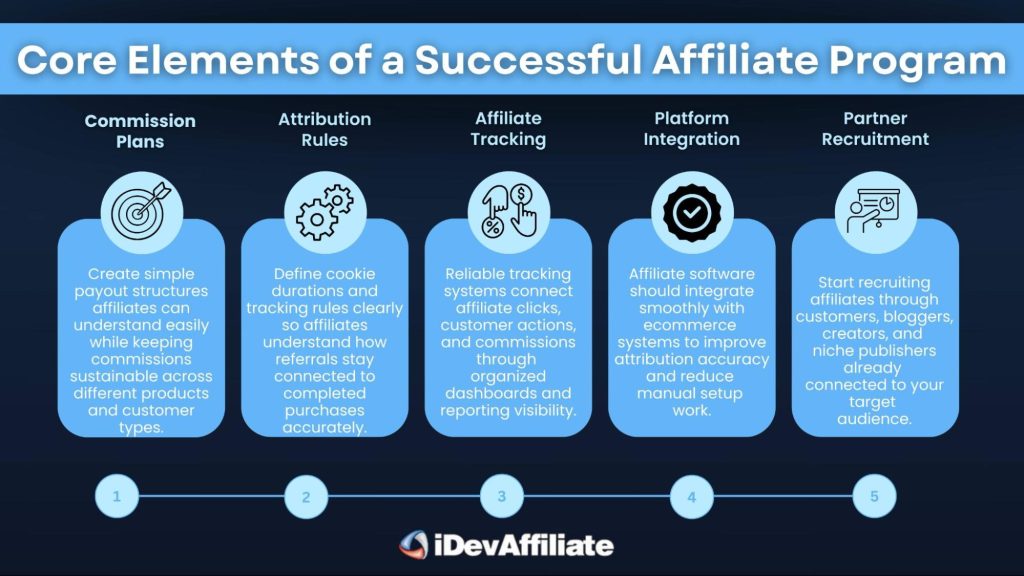
Launching an affiliate program becomes much easier when the foundational structure is built correctly from the beginning.
Clear commission rules, reliable tracking systems, and strong affiliate relationships all contribute to long-term program stability.
Once the technical and structural pieces are aligned properly, affiliate marketing becomes easier to manage and optimize over time.
Commission Structures and Program Terms
Commission structures determine how affiliates are rewarded for driving customer activity.
Businesses can offer percentage-based commissions, flat-rate payouts, or hybrid structures depending on product pricing, profit margins, and customer lifetime value across different sales scenarios.
Cookie Duration and Attribution Rules
Affiliate programs also need clearly defined attribution windows and tracking rules before recruiting partners.
Cookie duration determines how long referrals remain eligible for commission credit after clicks occur, helping prevent confusion around payouts, conversion ownership, and affiliate expectations.
Affiliate Tracking Software
Reliable affiliate software connects referral activity directly to verified customer conversions.
iDevAffiliate generates unique tracking links, monitor clicks and sales activity, and provide centralized dashboards that help businesses manage affiliate reporting and commission tracking accurately.
Ecommerce and Platform Integration
Affiliate tracking systems should integrate smoothly with ecommerce platforms and checkout processes.
Proper integrations reduce manual setup work, improve attribution accuracy, and ensure affiliate referrals continue tracking correctly throughout longer or more complex customer purchase journeys.
Recruiting Initial Affiliate Partners
Most businesses begin affiliate recruitment by reaching out to existing customers, niche bloggers, creators, or industry-specific influencers already connected to their target audience.
Early affiliate relationships often provide valuable feedback while helping generate initial referral activity and program momentum.
Common Mistakes Businesses Make When Starting Affiliate Programs
Most beginner affiliate programs do not fail because the business lacks potential.
They struggle because important structural pieces are either rushed, overlooked, or managed inconsistently during the early stages of growth.
Avoiding a few common mistakes early makes affiliate programs easier to scale, easier to manage, and more attractive to long-term affiliate partners.
- Weak Commission Structures: Low or unclear commission rates reduce affiliate motivation and make competing programs significantly more attractive.
- Limited Marketing Resources: Affiliates perform better when businesses provide banners, product visuals, email copy, and promotional content assets.
- Inconsistent Affiliate Communication: Irregular updates make affiliates disengage and reduce long-term promotional consistency across active partnerships.
- Unclear Attribution Rules: Missing cookie durations or commission policies often create payout confusion and unnecessary affiliate disputes later.
- Manual Tracking Workflows: Spreadsheet-based tracking increases reporting mistakes and creates avoidable operational problems as programs grow larger.
- Poor Affiliate Onboarding: Complicated setup processes discourage affiliates before they begin actively promoting products or referral offers.
iDevAffiliate helps businesses simplify affiliate management through centralized tracking, configurable commission structures, and organized affiliate reporting designed to reduce operational friction for growing programs.
How Businesses Can Grow and Scale Affiliate Revenue Over Time
Launching an affiliate program creates the foundation for growth, but long-term results come from optimizing affiliate performance over time.
The most successful programs consistently monitor data, reward productive partners, and improve how affiliates engage with promotional opportunities.
Scaling affiliate revenue becomes much easier when businesses combine performance visibility with structured commission incentives and reliable tracking systems.
- Monitor Affiliate Performance: Review clicks, conversions, and sales activity regularly to identify affiliates driving the strongest customer results.
- Prioritize High-Converting Partners: Focus support and promotional resources around affiliates consistently generating valuable referral traffic and purchases.
- Use Tiered Commission Structures: Higher commission tiers motivate affiliates to increase promotional activity and reach stronger performance targets.
- Reward Consistent Affiliate Growth: Performance-based incentives encourage affiliates to maintain long-term promotional consistency instead of short-term traffic spikes.
- Track Conversion Quality Carefully: Strong affiliate programs measure sales quality alongside raw referral traffic and click volume metrics.
- Optimize Based on Performance Data: Reliable tracking data helps businesses improve commission strategies and affiliate relationship management over time.
- Centralize Affiliate Reporting: iDevAffiliate helps businesses monitor affiliate performance, referral activity, and commission reporting from one platform dashboard.
Affiliate programs scale more effectively when businesses actively support productive partners instead of treating affiliate marketing as a passive acquisition channel.
Bottom Line: Does Affiliate Marketing Actually Work for Beginners?
Instant account set up. All features unlocked in base plan. Professional onboarding included.
Create Your Affiliate Program
Affiliate marketing is not just another marketing channel, it is a structured system built around referral tracking, performance-based payouts, and scalable partner relationships.
When affiliate programs lack reliable tracking or clear commission structures, everything becomes harder to manage: attribution, reporting, affiliate trust, and long-term growth.
Tracking consistency shapes affiliate program success.
When your affiliate system is built around verified referrals and organized commission management, affiliate marketing becomes much easier to scale sustainably:
- Referral tracking: connects affiliate clicks directly to verified customer conversions.
- Commission structures: apply consistent payout rules across affiliate partnerships and customer actions.
- Affiliate reporting: organizes clicks, sales, and commission activity into centralized performance visibility.
- Scalable program management: supports affiliate growth without increasing manual operational complexity.
iDevAffiliate strengthens this process through centralized affiliate tracking, configurable commission structures, and email-based attribution designed for longer customer journeys and more reliable referral visibility.
Affiliate programs grow more efficiently when tracking and commission systems remain consistent.
Start a free trial of iDevAffiliate to see how structured affiliate tracking and reliable commission management perform in real affiliate programs.
Frequently Asked Questions (FAQS)
You may also like

How to Set Up an Affiliate Program on BigCommerce

How to Set Up an Affiliate Program on WooCommerce

How to Set Up an Affiliate Program on Shopify

First Steps: 6 FREE Marketing Ideas For Your New Affiliate Program
Create Your Affiliate Program
- Unlimited Affiliates
- Unlimited Commissions
- Built-In SEO Links
- Social Media Sharing
- Affiliate Program Directory
