
How to Track Affiliate Sales Without Links

You can track affiliate sales without links by connecting purchases to customer emails, coupon codes, and backend conversion events. Linkless affiliate tracking preserves attribution across devices, repeat purchases, and longer buying journeys using identity-based tracking instead of browser-only sessions.
Here’s what matters most:
- Email-based affiliate tracking tied to verified customer identities
- Coupon attribution that tracks sales without requiring affiliate links
- Server-to-server conversion tracking using backend order events
- Cross-device tracking across mobile, desktop, and repeat sessions
- Fraud prevention systems that validate commissions automatically
- Real-time reporting with cleaner attribution and fewer tracking gaps
iDevAffiliate helps businesses maintain reliable affiliate attribution through email address-based tracking, coupon commissioning, and server-side conversion tracking built for modern affiliate programs.
By connecting affiliate referrals directly to verified customer activity, iDevAffiliate preserves attribution continuity across repeat purchases, subscription renewals, device switching, and longer customer journeys.
The sections below explain how linkless affiliate tracking works, why traditional browser-based attribution fails, and how businesses can build more reliable affiliate tracking systems that scale cleanly over time.
What Linkless Affiliate Tracking Actually Means
Linkless affiliate tracking allows businesses to attribute commissions without requiring customers to click a traditional affiliate tracking link first.
Instead of relying entirely on browser cookies and tracked clicks, modern affiliate tracking software connects purchases using identifiers like coupon codes, customer email addresses, first-party data, and server-confirmed order events. This gives businesses more reliable affiliate tracking across longer buying journeys, repeat purchases, device switching, and situations where browser-based tracking methods become inconsistent or break completely over time.
Modern affiliate tracking tools increasingly rely on identity-based attribution and cookieless tracking methods instead of depending entirely on traditional browser sessions or temporary tracking links. This improves long-term data accuracy while helping affiliate programs maintain cleaner attribution visibility across multiple customer touchpoints.
Coupon Code Attribution
Coupon-based tracking connects affiliate commissions directly to unique discount codes assigned to each partner.
When customers enter the affiliate’s code during checkout, the affiliate tracking software records the purchase and automatically attributes the completed order back to the correct affiliate relationship.
Coupon tracking is especially effective for influencer partnerships, podcasts, YouTube promotions, webinars, and offline campaigns where customers may never click a traditional affiliate link before purchasing. This creates more flexible affiliate marketing opportunities while helping affiliates protect their affiliate earnings across non-traditional promotional channels.
Email Address-Based Tracking
Email tracking connects affiliate referrals to a customer’s verified email address rather than depending entirely on browser sessions.
This allows attribution to remain connected even if cookies expire, browsers block tracking storage, or customers switch between devices before completing their purchase later.
Email-based attribution also improves cross-device tracking and multi-channel attribution because customer identities remain connected regardless of browser, session, or device changes. Instead of relying entirely on temporary browser storage, affiliate software can maintain attribution continuity using verified customer information and first-party data relationships.
Server-Side Conversion Tracking
Server-to-server attribution confirms affiliate conversions directly through backend systems instead of relying only on browser activity.
Once an order is completed, the ecommerce platform sends transaction details to the affiliate software, allowing commissions to be validated through confirmed purchase records automatically.
More advanced affiliate tracking software uses API integrations and ecommerce integrations to validate conversions directly from backend systems instead of relying only on browser-side scripts or pixels. This improves real-time reporting, strengthens real-time analytics visibility, and significantly improves attribution data accuracy over time.
Silent Cookie Tracking Failures
Traditional cookie tracking often fails quietly without obvious reporting errors during the customer journey.
Privacy restrictions, consent settings, cookie clearing, private browsing, and device switching can all disconnect affiliate referrals from purchases even when customers still complete the transaction successfully afterward.
As browsers continue restricting third-party cookies and limiting fingerprinting techniques, affiliate attribution models that rely entirely on browser behavior become increasingly fragile. This is one of the primary reasons businesses are adopting cookieless tracking and identity-based affiliate tracking methods more aggressively.
Attribution Rules and Commission Validation
Reliable linkless attribution depends on clearly defined rules explaining what qualifies for commission credit consistently.
Most affiliate programs validate commissions using order IDs, coupon usage, verified customer emails, and confirmed transaction events instead of relying only on browser-based click history alone.
Reliable fraud prevention systems also help businesses improve fraud detection by identifying suspicious affiliate fraud patterns like duplicate conversions, coupon abuse, fake leads, or commission manipulation before payouts are approved. Strong attribution rules create cleaner reporting, more reliable partner management, and fewer commission disputes as affiliate programs scale.
How Email and Identity-Based Tracking Replaces Affiliate Links
Email and identity-based tracking replaces traditional click-to-cookie attribution by connecting affiliate referrals to verified customer identifiers instead of temporary browser sessions.
Rather than depending entirely on tracking links and cookies, affiliate tracking software can match purchases using customer emails, account logins, first-party data, or authenticated user activity. This creates more reliable affiliate tracking across repeat purchases, longer buying cycles, device switching, and situations where browser-based referral tracking becomes incomplete or unreliable over time.
As attribution models continue shifting away from third-party cookies, identity-based tracking gives businesses a more stable way to track affiliate sales while maintaining cleaner long-term attribution visibility.
1. Email Capture During Signup
Affiliate attribution becomes more reliable when customer emails are captured naturally during signup or checkout flows.
Account registration, newsletter forms, checkout pages, and account activation steps all create opportunities to connect future purchases back to the original affiliate referral consistently.
This also improves affiliate marketing reporting because attribution stays connected to verified customer records instead of relying entirely on temporary browser sessions or short-lived tracking methods.
2. Identity-Based Referral Matching
Identity-based tracking connects affiliate referrals directly to verified customer information stored inside the platform.
iDevAffiliate directly supports email address-based tracking, allowing businesses to tie commissions to verified customer identities instead of relying entirely on browser sessions, cookies, devices, or temporary click tracking alone.
Modern affiliate tracking tools that use identity matching often provide stronger data accuracy because attribution can persist across future purchases, subscription renewals, recurring commissions, and delayed conversions more reliably.
3. Cross-Device Attribution Continuity
Device switching becomes far less disruptive once affiliate attribution relies on customer identities instead of browser cookies.
If a customer clicks an affiliate promotion on mobile but purchases later on desktop, identity-based tracking can reconnect those sessions through verified customer information successfully.
This type of cross-device tracking is becoming increasingly important as customer journeys span multiple devices, browsers, and marketing channels before a final purchase occurs. Identity-based systems also support cleaner multi-channel attribution because customer activity remains connected throughout the buying process.
4. Verified Customer Data Collection
Reliable attribution depends on collecting consistent and verified customer information throughout the purchase journey.
iDevAffiliate stores referral relationships using customer email addresses, helping businesses preserve affiliate attribution even when cookies expire, browsers block tracking data, or customers switch devices before purchasing later.
Because attribution remains tied to verified customer identities, affiliate dashboards can maintain more accurate partner performance reporting and cleaner long-term commission visibility across repeat purchases and subscription billing cycles.
5. Attribution Rules and Fraud Prevention
Identity-based tracking still requires clear attribution rules and commission validation processes to prevent reporting disputes.
Programs usually define how email matches work, how repeat purchases are credited, and how suspicious activity patterns get reviewed before commissions become fully approved for payout.
Reliable fraud prevention systems also help businesses improve fraud detection by identifying duplicate signups, fake referrals, coupon abuse, or suspicious affiliate fraud behavior before commissions are finalized. This creates cleaner reporting, stronger partner management workflows, and more predictable commission structures over time.
When affiliate attribution stays connected to verified customer identities, businesses gain far more stability than browser-only tracking can provide alone.
The next step is validating those affiliate conversions directly from backend systems, which is where server-to-server tracking becomes critical for maintaining cleaner attribution and more reliable commission reporting over time.
Using Server-to-Server Tracking for Reliable Affiliate Attribution
Once affiliate attribution is connected to customer identities instead of browser cookies alone, the next step is validating conversions directly from your backend systems.
This is where server-to-server tracking becomes important for maintaining cleaner attribution, improving data accuracy, and reducing silent tracking failures.
Instead of depending entirely on browser sessions, businesses can confirm affiliate commissions using verified order data, transaction events, API integrations, and backend reporting systems. This gives affiliate tracking software a more reliable foundation for validating completed purchases and protecting commission accuracy over time.
Server-Side Conversion Tracking
Server-to-server tracking records affiliate conversions directly from your ecommerce platform or backend system instead of relying entirely on browser-based tracking scripts.
This creates more reliable attribution when cookies fail, devices change, or customer browsers block tracking requests during the purchase process.
For ecommerce integrations, server-side conversion tracking is especially useful because the actual order system confirms the sale, transaction value, customer record, coupon code, and commission-eligible event.
Browser Events vs Backend Events
Browser events rely on pixels or scripts loading successfully after checkout, while server events confirm conversions from the actual order system itself.
More advanced platforms, like iDevAffiliate, support server-side tracking methods that reduce attribution gaps caused by blocked scripts, browser restrictions, interrupted sessions, or incomplete tracking setup.
The practical difference is simple: browser events show what happened in the visitor’s browser, while backend events confirm what happened inside the business’s order system.
Attribution Data Consistency
Reliable affiliate attribution depends on sending consistent identifiers alongside every confirmed conversion event.
Order IDs, transaction values, affiliate identifiers, customer emails, coupon codes, UTM parameters, and tracking link data all help affiliate software connect completed purchases back to the correct referral source accurately over time.
This also improves real-time reporting and real-time analytics because affiliate dashboards can reflect verified transaction data instead of depending entirely on browser-side tracking signals.
Order Validation and Deduplication
Server-side tracking systems should validate orders carefully before approving affiliate commissions automatically.
Duplicate events, failed callbacks, refunds, canceled purchases, or repeated pixel pings can all distort reporting unless attribution systems apply proper deduplication rules and consistent order status validation across conversion records.
Strong validation also supports fraud prevention by helping businesses identify affiliate fraud patterns such as duplicate commissions, suspicious repeat transactions, coupon misuse, or invalid conversion attempts before payouts are finalized.
Refunds and Commission Adjustments
Affiliate reporting becomes more reliable when backend systems continue updating commissions after the original purchase occurs.
Server-to-server attribution allows businesses to process refunds, cancellations, partial reversals, and chargebacks more accurately.
This keeps affiliate dashboards aligned with actual recognized revenue, settled transaction activity, partner performance, and approved affiliate earnings over time.
Benefits of Linkless Tracking for Long-Term Attribution
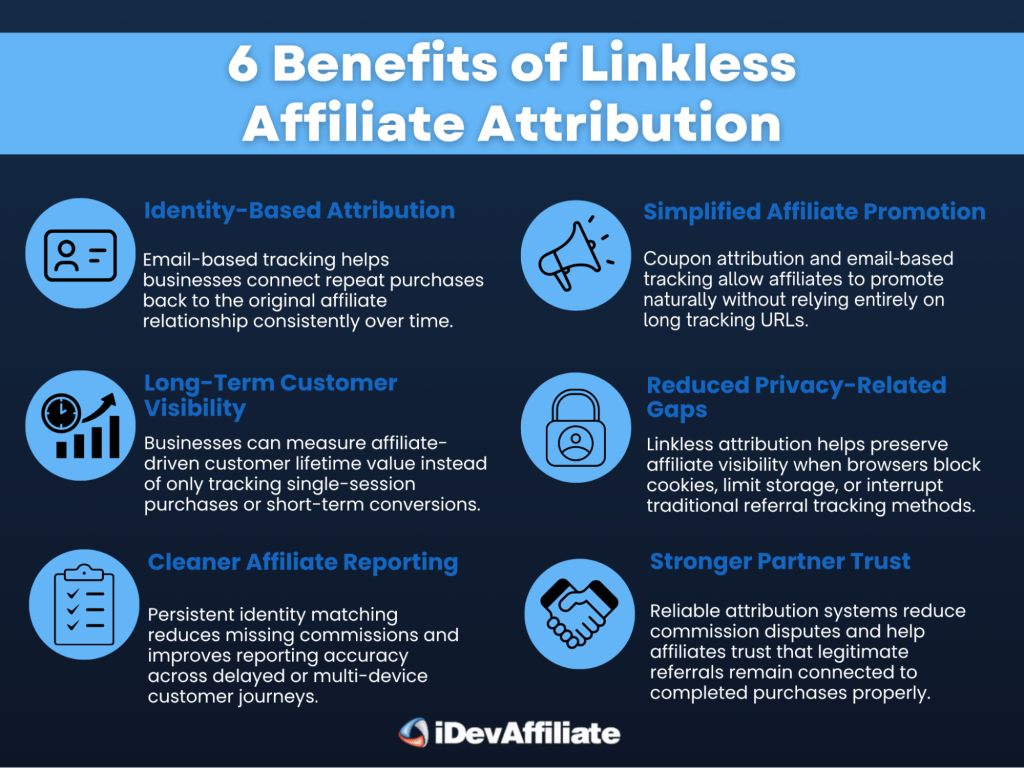
Once businesses move beyond browser-only attribution, affiliate tracking becomes easier to maintain across longer customer journeys, repeat purchases, and privacy-related disruptions.
Linkless attribution helps preserve commission visibility even when traditional tracking methods fail silently behind the scenes.
The biggest advantage is consistency: affiliates stay connected to verified customer activity instead of relying entirely on temporary browser sessions.
- Identity-Based Attribution: Email-based tracking helps businesses connect repeat purchases back to the original affiliate relationship consistently over time.
- Long-Term Customer Visibility: Businesses can measure affiliate-driven customer lifetime value instead of only tracking single-session purchases or short-term conversions.
- Cleaner Affiliate Reporting: Persistent identity matching reduces missing commissions and improves reporting accuracy across delayed or multi-device customer journeys.
- Simplified Affiliate Promotion: Coupon attribution and email-based tracking allow affiliates to promote naturally without relying entirely on long tracking URLs.
- Reduced Privacy-Related Gaps: Linkless attribution helps preserve affiliate visibility when browsers block cookies, limit storage, or interrupt traditional referral tracking methods.
- Stronger Partner Trust: Reliable attribution systems reduce commission disputes and help affiliates trust that legitimate referrals remain connected to completed purchases properly.
When affiliate attribution remains stable across devices, sessions, and repeat purchases, businesses gain cleaner reporting.
And stronger affiliate relationships with more predictable long-term commission management.
How to Implement Linkless Affiliate Tracking Successfully
Linkless affiliate tracking works best when attribution rules, commission logic, and conversion validation are configured together from the beginning.
The goal is not simply removing affiliate links, but creating an affiliate tracking system that remains reliable across devices, repeat purchases, and longer customer journeys.
When implementation stays structured, businesses reduce attribution disputes, improve reporting visibility, and create affiliate programs partners trust more consistently over time.
Choose the Right Attribution Method
Businesses should choose attribution models based on how customers actually purchase products and how affiliates naturally promote offers.
iDevAffiliate supports coupon code commissioning, email address tracking, and hybrid attribution methods that help businesses maintain cleaner affiliate tracking across multiple promotional channels and buying behaviors.
Businesses should also evaluate their tracking setup carefully to ensure it supports cross-device tracking, first-party data collection, UTM parameters, and ecommerce integrations that align with their customer journey.
Configure Clear Commission Rules
Commission structures should define exactly which purchases qualify for payouts and which scenarios trigger reversals or exclusions.
Businesses should document coupon stacking rules, refund handling, attribution windows, recurring commissions, and customer eligibility clearly so affiliates understand how commissions are calculated and validated consistently.
Clear commission rules also simplify partner management by reducing confusion around affiliate earnings, attribution ownership, and payout approvals.
Capture Verified Customer Identifiers
Reliable linkless attribution depends on capturing stable customer identifiers during signup, checkout, or account creation flows.
iDevAffiliate supports email-based tracking that connects affiliate referrals directly to verified customer identities instead of relying entirely on browser cookies or temporary sessions.
This creates more reliable attribution continuity across repeat purchases, subscription renewals, and longer buying cycles while supporting cleaner multi-channel attribution visibility.
Validate Orders Through Backend Events
Server-side conversion tracking helps businesses confirm affiliate sales directly from backend order systems instead of browser-only tracking scripts.
This improves attribution accuracy when cookies fail, devices change, or browsers block tracking storage before customers complete purchases later in the buying journey.
Businesses using API integrations and ecommerce integrations can also improve real-time reporting, real-time analytics, and overall data accuracy by validating conversions directly through backend transaction events.
Test Attribution Before Launch
Businesses should fully test affiliate attribution before inviting partners into the program publicly.
iDevAffiliate allows businesses to validate coupon attribution, email-based tracking, commission calculations, refunds, tracking links, and reporting visibility so affiliate tracking stays accurate before larger volumes of referral traffic begin scaling.
Testing should include multiple attribution scenarios across devices, browsers, coupon usage, and repeat purchase flows to ensure the affiliate tracking software behaves consistently before launch.
Bottom Line: Does Linkless Affiliate Tracking Actually Matter?
Instant account set up. All features unlocked in base plan. Professional onboarding included.
Create Your Affiliate Program
Linkless affiliate tracking is not just an alternative attribution method, it is a more reliable way to preserve affiliate visibility across longer and more complex customer journeys.
When attribution depends entirely on browser cookies or tracked clicks, everything becomes harder to manage: commissions, reporting accuracy, affiliate trust, and long-term payout consistency.
Attribution reliability shapes affiliate program performance.
When your tracking system is built around verified customer identifiers and backend conversion validation, affiliate programs become easier to manage and scale consistently:
- Identity-based attribution: connects affiliate referrals directly to verified customer activity across sessions and devices.
- Coupon code tracking: attributes purchases accurately even when customers never click traditional affiliate links.
- Server-side validation: confirms affiliate conversions through backend transaction events instead of browser-only tracking.
- Audit-ready reporting: keeps commissions, refunds, and attribution records connected to verified order activity consistently.
iDevAffiliate directly supports email address-based tracking, coupon attribution, and server-to-server conversion tracking.
This helps businesses preserve attribution continuity even when browser-based tracking becomes unreliable or customer journeys span multiple devices and sessions.
Affiliate programs scale more efficiently when attribution remains accurate. Start a free trial of iDevAffiliate to see how linkless affiliate tracking performs in real affiliate environments.
Frequently Asked Questions (FAQS)
You may also like

How to Set Up an Affiliate Program on BigCommerce

How to Set Up an Affiliate Program on WooCommerce

How to Set Up an Affiliate Program on Shopify

First Steps: 6 FREE Marketing Ideas For Your New Affiliate Program
Create Your Affiliate Program
- Unlimited Affiliates
- Unlimited Commissions
- Built-In SEO Links
- Social Media Sharing
- Affiliate Program Directory
