
Scaling Your Affiliate Program: From Small Beginnings to Big Profits

Every successful business reaches a point where relying solely on paid ads and organic search isn’t enough. You need advocates—people who already have the trust of your target audience—to champion your products.
However, launching a basic affiliate program is only the first step. If you have hit a plateau where a few top partners are driving all the sales and the rest are inactive, it is time for a strategic upgrade. To truly turn your program into a massive revenue engine, you must continually optimize affiliate partnerships and refine your backend processes.
In this comprehensive guide, we will explore actionable strategies for scaling affiliate programs from their small beginnings into highly profitable channels.
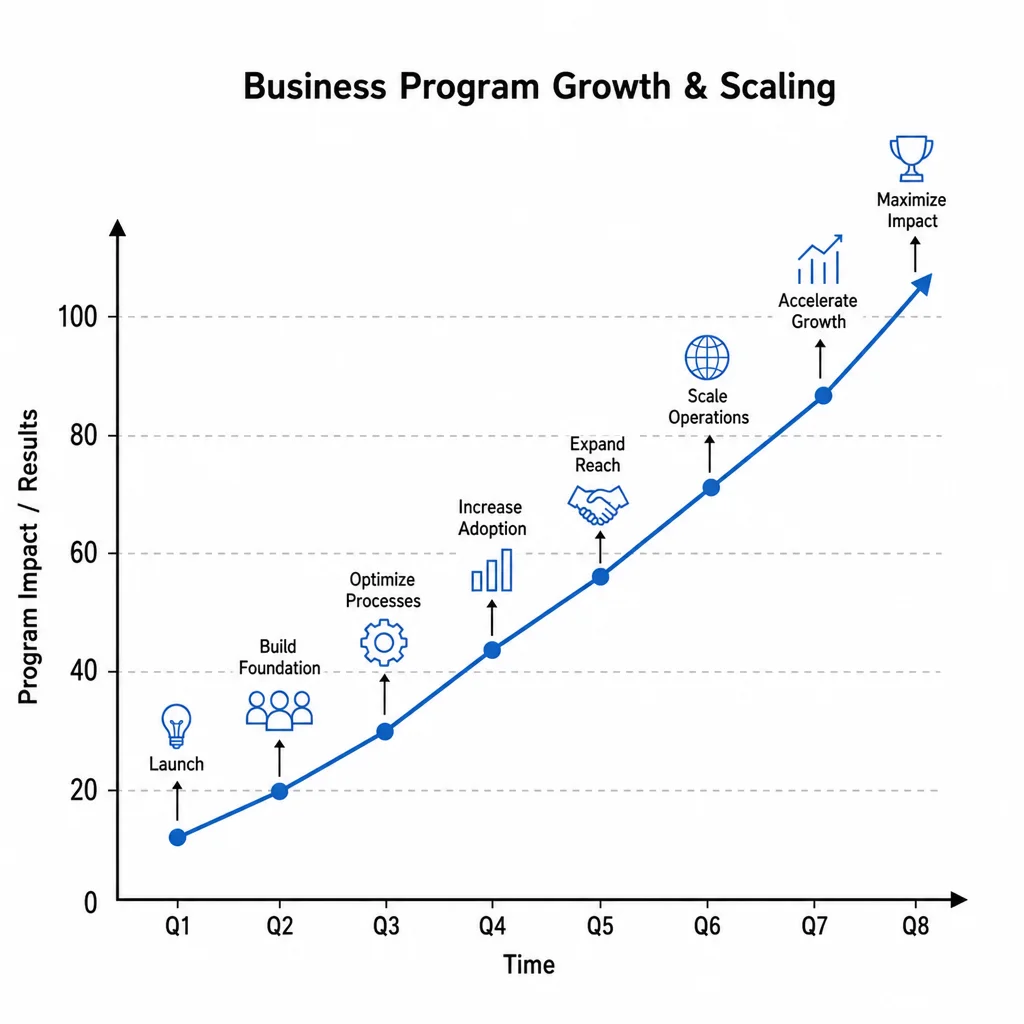
Laying the Groundwork for Unprecedented Growth
Before you start recruiting hundreds of new partners, you need a rock-solid foundation. Scaling on top of broken tracking or an outdated strategy will only multiply your problems.
Conduct a Thorough Program Review
The first step to sustainable growth is running through a comprehensive affiliate program audit checklist. Take an honest look at your current operations:
- Evaluate your tech stack: Are you using the best affiliate tracking software for startups, or have you outgrown your current platform? Upgrading to an enterprise-grade or highly customizable tool can automate payouts and provide deeper analytics.
- Analyze active vs. inactive partners: Identify who is driving traffic and who has gone dormant.
- Review competitor offers: Are your commissions still competitive in your niche?
Modernize Your Tracking and Attribution
In the age of ad blockers and privacy-first web browsing, traditional cookie tracking is no longer reliable. If you are losing sales data, your affiliates are losing money—and they will eventually leave.
To future-proof your program, prioritize a first-party cookie tracking implementation. By tracking referrals directly through your own domain rather than relying on third-party pixels, you ensure that every sale is accurately recorded.
Furthermore, consider upgrading to multi-touch attribution for affiliate marketing. Instead of merely rewarding the “last click” before a purchase, multi-touch attribution helps you understand how different affiliates contribute to the entire customer journey. This ensures content creators who introduce customers to your brand get rewarded just like the coupon sites that close the deal.
Attracting and Onboarding the Best Partners
The secret to scaling referral marketing programs and affiliate networks alike isn’t necessarily having more affiliates; it is having the right affiliates.
Finding the Right Fit
Learning how to recruit top tier affiliates requires shifting from a passive “apply here” mentality to an active outreach strategy.
- Search for niche influencers: Look for bloggers, podcasters, and YouTube creators who already rank for your target SEO keywords.
- Analyze complementary businesses: B2B software companies, for example, can partner with digital marketing agencies.
- Nurture your VIPs: There is a distinct difference between a standard affiliate and a true brand champion. Managing high-performing brand ambassadors requires a personalized touch, direct communication channels (like a dedicated Slack channel), and exclusive perks that make them feel like part of your internal team.

Making a Great First Impression
A massive drop-off occurs between the moment an affiliate signs up and the moment they share their first link. Streamlining partner onboarding process is crucial to closing this gap.
Create an automated welcome sequence that guides new partners through their first 30 days. Provide them with everything they need to start selling immediately by creating affiliate marketing creative assets. A robust affiliate resource hub should include:
- High-resolution product images and lifestyle photography.
- Pre-written email swipe copy.
- Social media templates for Instagram, LinkedIn, and X.
- Detailed brand guidelines to ensure consistent messaging.
Structuring Highly Profitable Commission Models
Money talks. If your payout structure is confusing or uncompetitive, top-tier marketers will simply promote your competitors.
Deciding on Payouts: Which Model Wins?
When deciding how to set affiliate commission rates, you must first understand the fundamental difference between the two dominant payment models: CPA vs RevShare models.
- Cost Per Action (CPA): You pay a flat fee every time an affiliate generates a specific action, such as a qualified lead or a first-time purchase. This is highly attractive to affiliates because the payout is predictable, making it a great model for SaaS or subscription boxes.
- Revenue Share (RevShare): The affiliate earns a percentage of the total cart value. This encourages partners to promote higher-ticket items or upsells, making it the preferred model for e-commerce brands.
To remain competitive, calculate your Customer Acquisition Cost (CAC) and Gross Margin. Your commission rate should sit comfortably below your maximum CAC while remaining generous enough to entice top creators.
Motivating Your Partners to Do More
A flat commission rate rarely inspires long-term loyalty. If you want to keep your top sellers engaged, you must focus on maximizing partner lifetime value.
One of the best ways to do this is by incentivizing affiliates with performance bonuses. Consider implementing tiered commission structures:
- Volume bonuses: “Generate 50 sales this month and receive a $500 cash bonus.”
- Tiered upgrades: “Hit $10,000 in monthly revenue and permanently upgrade from a 15% to a 20% commission rate.”
- First-sale rewards: Give new affiliates a small cash bonus just for generating their first sale within 14 days of joining to build momentum.
Maximizing Conversions and Program Security
Driving traffic is only half the battle; that traffic actually needs to convert into paying customers while protecting your bottom line from bad actors.
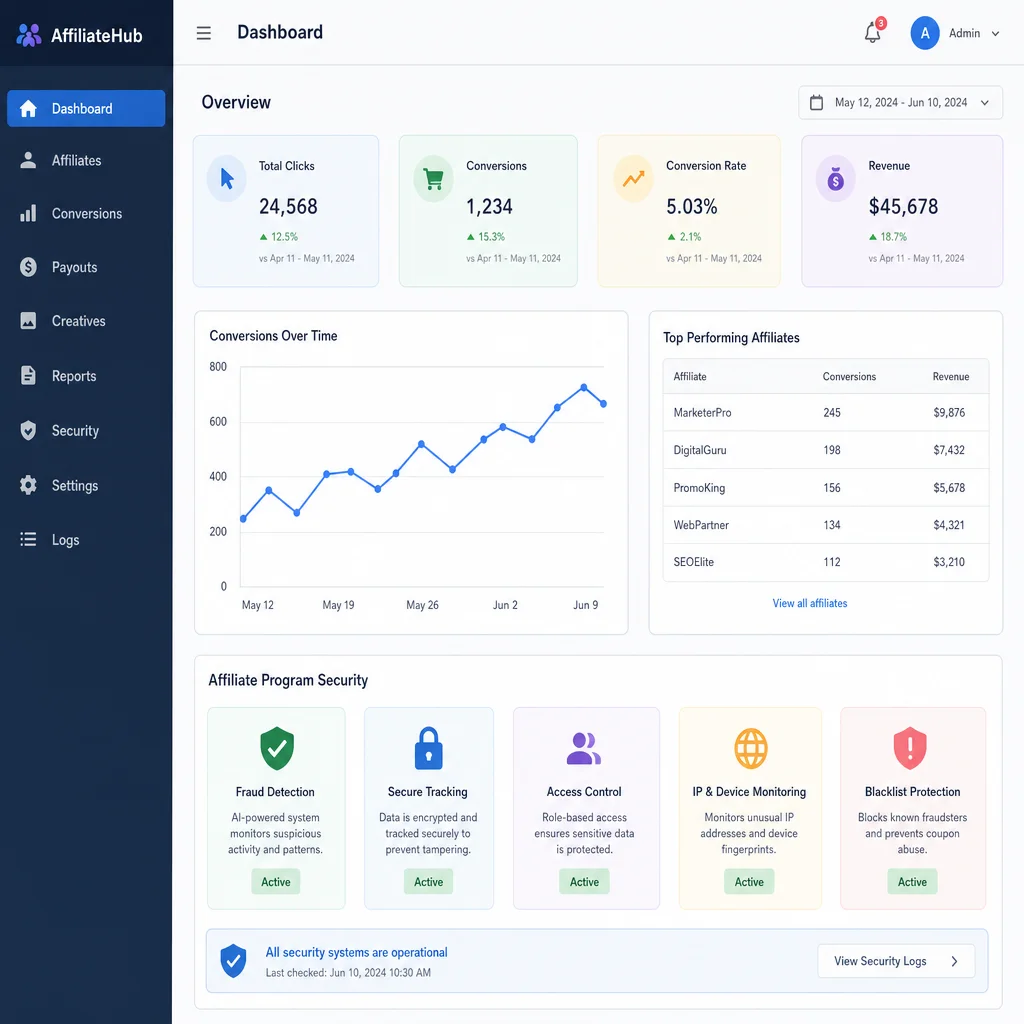
Boosting Affiliate Conversions
If an affiliate sends you 1,000 clicks but zero sales, they will quickly move on to another program. Improving affiliate conversion rates is a shared responsibility. Here are a few vital affiliate marketing tips to maximize ROI:
- Co-branded landing pages: When a top affiliate sends traffic, direct them to a customized landing page (e.g., “Welcome listeners of [Podcast Name]!”). This builds instant trust and dramatically increases conversion rates.
- Exclusive promo codes: Give your best affiliates unique discount codes to share with their audience. Vanity codes (like “JOHNSMITH20”) are easier to remember and track than long, auto-generated strings of text.
- Provide conversion data: Share insights with your partners. Tell them which products are currently converting best and what demographics are buying.
Protecting Your Profits
As your program grows, so does your risk of exposure to malicious activity. Preventing affiliate marketing fraud is non-negotiable if you want to scale profitably.
Fraudsters can drain your marketing budget using tactics like cookie stuffing (dropping tracking cookies on users who never actually clicked a link), using stolen credit cards to generate fake CPA leads, or bidding on your branded trademark terms in Google Ads to hijack your organic search traffic.
To secure your program:
- Enforce a strict set of terms and conditions regarding paid search bidding.
- Regularly monitor referring URLs to ensure traffic is coming from approved sources.
- Set up automated alerts for abnormally high refund rates or unusually rapid spikes in traffic from unverified partners.
The Continuous Optimization Cycle
Scaling an affiliate program is never truly “finished.” The digital landscape shifts, consumer behaviors evolve, and new promotional channels emerge. To stay ahead of the curve, you must view your program as a living, breathing ecosystem.
Make it a habit to communicate with your partners regularly. Send out monthly newsletters highlighting new product launches, upcoming seasonal sales, and leaderboard shoutouts. Ask your top performers what they need from you to double their output—you might be surprised by how simple their requests are.
By prioritizing transparent communication, leveraging advanced tracking technologies, and constantly seeking to optimize affiliate partnerships, you can transform a handful of casual promoters into a dedicated, scalable, and highly profitable sales force. Start with these fundamental strategies today, and watch your affiliate revenue reach new heights.
You may also like

How to Set Up an Affiliate Program on BigCommerce

How to Set Up an Affiliate Program on WooCommerce

How to Set Up an Affiliate Program on Shopify

First Steps: 6 FREE Marketing Ideas For Your New Affiliate Program
Create Your Affiliate Program
- Unlimited Affiliates
- Unlimited Commissions
- Built-In SEO Links
- Social Media Sharing
- Affiliate Program Directory
