
How to Create Shopify Affiliate Links

Creating Shopify affiliate links is simple: generate a unique tracking URL for each affiliate, connect it to your Shopify store, and track conversions through reliable attribution software that records clicks, purchases, and commissions accurately.
But most Shopify affiliate programs do not fail because links are difficult to create. They fail when attribution breaks between the affiliate click, the customer purchase, and the final commission payout.
Affiliate tracking software helps solve that by connecting referral tracking, attribution rules, conversion validation, and commission reporting into one reliable system. When attribution stays consistent, businesses can scale affiliate programs without creating reporting confusion or payout disputes.
Here’s what actually matters:
- Track affiliate clicks, conversions, and referral activity accurately
- Apply attribution windows consistently across the customer journey
- Validate conversions across devices, browsers, and delayed purchases
- Protect commissions using clear payout and approval workflows
- Maintain audit-ready reporting for affiliate activity and disputes
Businesses using reliable affiliate tracking platforms with identity-based attribution usually maintain stronger reporting consistency as affiliate programs scale across multiple customer journeys and devices.
Most affiliate reporting problems do not appear overnight.
They usually start when attribution becomes inconsistent enough that affiliates stop trusting how commissions are tracked and credited over time.”
What Are Shopify Affiliate Links and How They Work
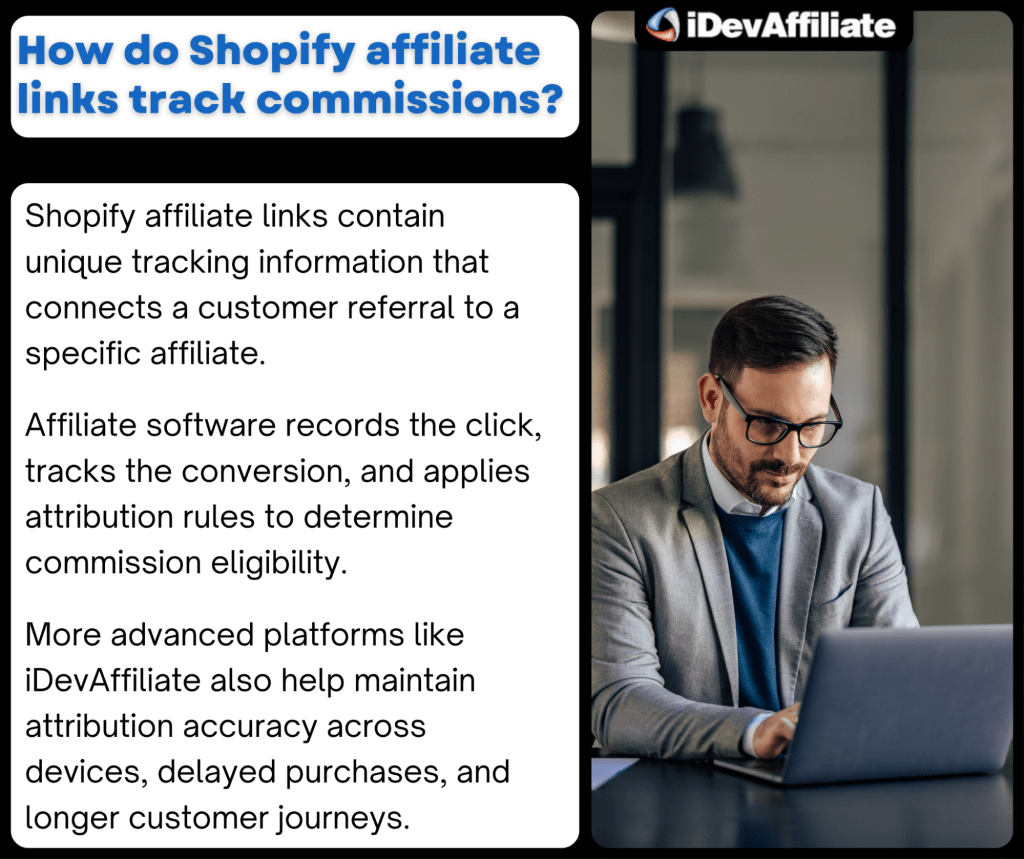
A Shopify affiliate link is a product or page URL that contains tracking information connecting a referral to a specific affiliate.
When a customer clicks the link, affiliate software records the referral and later matches completed purchases back to the correct partner for commission tracking.
Affiliate software assigns each partner a unique tracking link or identifier. That link usually contains an affiliate ID, campaign label, or tracking parameter that tells the system where the click originated and which affiliate should receive credit.
Here’s what a Shopify affiliate tracking link typically includes:
- Affiliate ID: Identifies which partner drove the referral
- Campaign Parameters: Tracks specific promotions or placements
- Click Redirects: Logs referral activity before page loading
- Tracking Tags: Organizes reporting across campaigns and channels
More advanced platforms, like iDevAffiliate, also support email address-based tracking. This helps maintain attribution continuity when cookies expire, devices change, or browsers limit tracking storage.
Attribution rules then determine whether the affiliate receives commission after the purchase happens. Most affiliate programs use attribution windows that define how long a referral remains eligible after the original click.
If tracking parameters are edited, removed, or overwritten, attribution can fail completely. That is usually where commission disputes begin, because affiliates can see the traffic they generated while businesses lose visibility into the final conversion path.
Setting Up a Reliable Shopify Affiliate Program
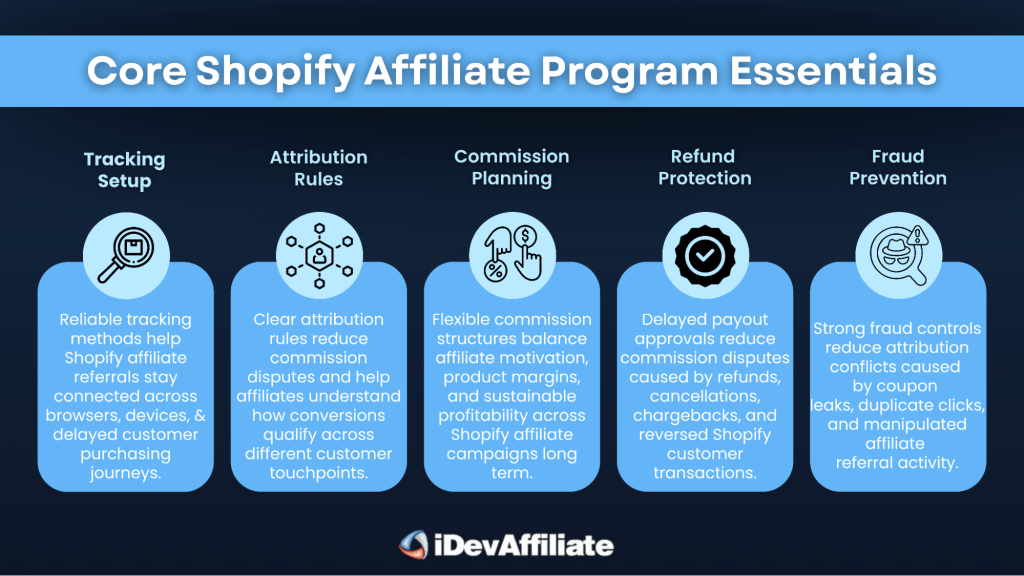
Affiliate programs work best when attribution rules, commission structures, and payout policies are defined before affiliates start promoting products.
The goal is not just to generate tracking links, but to create a system affiliates trust and businesses can scale without constant commission disputes.
1. Tracking Method Selection
Your tracking setup determines how reliably affiliate referrals connect to completed Shopify purchases. Different tracking methods handle attribution gaps differently, especially when customers switch devices or browsers block tracking cookies.
Dedicated affiliate tracking software usually provides stronger attribution control than basic app-only setups. iDevAffiliate supports email address-based tracking to help businesses maintain attribution continuity across cross-device customer journeys.
2. Attribution Rule Configuration
Attribution rules define when commissions qualify and which affiliate receives credit during multi-touch customer journeys.
Clear rules reduce payout confusion and help affiliates understand exactly how conversions are attributed over time.
Most Shopify affiliate programs configure attribution windows, click priority rules, and coupon attribution settings before links are distributed.
Consistent attribution logic keeps reporting cleaner as affiliate traffic volume increases.
3. Commission Structure Planning
Commission structures should balance affiliate motivation with long-term profit protection across different Shopify product categories.
Simple commission rules are easier for affiliates to understand and easier for businesses to manage consistently.
Percentage commissions, flat payouts, and category-level rates all work differently depending on product margins. iDevAffiliate allows businesses to apply flexible commission structures across different affiliate campaigns, product categories, and partner types.
4. Return and Chargeback Protection
Affiliate payouts become unreliable when returns, refunds, and chargebacks are not built into commission approval workflows.
Strong payout controls protect margins while keeping affiliate reporting transparent and predictable over time.
Most programs delay commission approvals until orders move beyond the normal refund window. This reduces clawback disputes and helps businesses avoid paying commissions on canceled revenue.
5. Edge Case and Fraud Planning
Affiliate tracking becomes less reliable when edge cases interrupt the normal customer conversion path.
Cross-device behavior, coupon leaks, and multiple affiliate clicks can all create attribution conflicts if rules are unclear.
iDevAffiliate helps businesses manage these scenarios through consistent attribution rules, conversion validation, and fraud prevention controls.
That keeps reporting more accurate as affiliate programs scale across multiple channels.
Generating and Testing Shopify Affiliate Links
Affiliate links work best when every click, campaign, and product referral stays connected through consistent attribution tracking.
The goal is not just to create links, but to build reporting that clearly explains which affiliate activity generated real conversions and commissionable revenue.
Product Link Structure
Affiliate links should direct customers to the exact Shopify product or landing page being promoted.
Clear link structure improves attribution visibility and helps businesses understand which campaigns generate actual purchase activity.
Most affiliate programs create separate tracking links for different products, campaigns, and traffic channels.
iDevAffiliate helps businesses organize affiliate links with flexible tracking parameters and cleaner reporting segmentation.
Campaign Tracking Consistency
Campaign-level tracking makes affiliate reporting easier to audit across newsletters, YouTube placements, paid ads, and social campaigns.
Consistent naming structures prevent attribution confusion when multiple promotions run simultaneously across different traffic sources.
Separate tracking links should exist for each traffic source and campaign variation.
This creates cleaner reporting visibility and helps businesses identify which promotions actually contribute to profitable affiliate conversions.
Attribution Parameter Protection
Affiliate attribution depends on tracking parameters remaining unchanged throughout the customer journey.
Even small edits to URLs or redirect structures can interrupt click tracking and disconnect referrals from completed purchases.
Most affiliate tracking systems rely on affiliate IDs, campaign labels, and redirect logging to maintain attribution continuity. Removing or rewriting those parameters often creates the commission disputes affiliates worry about most.
Full Purchase Flow Testing
Affiliate tracking should always be tested through a complete purchase flow before links are distributed to partners. End-to-end testing confirms that click tracking, attribution rules, and conversion reporting all work together correctly.
iDevAffiliate allows businesses to validate affiliate clicks, conversions, and commission attribution through reporting tools before launching campaigns publicly.
This helps reduce missing commissions and attribution errors before affiliate traffic begins scaling.
Multi-Link Validation
Affiliate programs become more reliable when multiple product and campaign links are tested before launch. Testing only one tracking link can hide attribution problems tied to specific pages, products, or traffic sources.
Most businesses test affiliate links across different campaigns, devices, and customer journeys to confirm attribution consistency.
Strong testing processes create cleaner reporting and more trustworthy commission tracking long term.
How to Measure and Manage Affiliate Link Performance
Instant account set up. All features unlocked in base plan. Professional onboarding included.
Create Your Affiliate Program
Affiliate link performance becomes easier to manage when reporting stays connected to real conversion behavior instead of surface-level click volume alone.
Strong tracking visibility helps businesses identify profitable affiliates, resolve payout disputes faster, and maintain more reliable commission reporting over time.
- Click-to-Conversion Gaps: Large differences between clicks and sales often signal attribution issues, broken pages, or low-intent affiliate traffic.
- Conversion Quality Tracking: Strong affiliate programs monitor conversion rates and customer value, not just raw referral traffic volume alone.
- Revenue After Refunds: Net revenue tracking prevents inflated affiliate performance caused by cancellations, refunds, or chargeback-heavy customer activity.
- Pending Commission Reviews: Delayed commission approvals reduce payout disputes by validating purchases before affiliate commissions become eligible for release.
- Consistent Audit Records: Clear reporting logs help businesses verify clicks, conversions, reversals, and payout decisions without unnecessary affiliate disputes.
When affiliate reporting stays accurate, businesses can scale high-performing partners more confidently without creating attribution confusion or payout inconsistencies.
Best Practices to Improve Affiliate Link Conversions
Affiliate conversions improve when commission structures, attribution rules, and fraud controls stay aligned with actual customer behavior.
Strong affiliate programs focus on conversion quality, attribution consistency, and partner trust instead of scaling clicks without structure.
- Align Commission Incentives: Match commission structures to how affiliates influence conversions across content, reviews, coupons, or lead-generation traffic.
- Protect Attribution Accuracy: Longer attribution windows help content-focused affiliates maintain commission visibility across delayed purchasing decisions.
- Control Coupon Distribution: Unique partner-specific coupon codes reduce unauthorized sharing and limit attribution confusion across discount-heavy campaigns.
- Monitor Suspicious Activity: Sudden traffic spikes and unrealistic conversion rates often indicate low-quality traffic or manipulated attribution behavior.
- Lock Tracking Parameters: Consistent affiliate links prevent broken attribution caused by unauthorized edits, redirects, or missing tracking identifiers.
When commission logic and attribution rules stay consistent, affiliate programs scale more predictably without increasing reporting disputes or conversion instability.
Bottom Line: Reliable Shopify Affiliate Tracking Starts With Clear Attribution
Instant account set up. All features unlocked in base plan. Professional onboarding included.
Create Your Affiliate Program
Shopify affiliate programs work best when tracking, attribution, and commission workflows stay connected inside one reliable system.
The goal is not just to generate affiliate links, but to maintain accurate conversion tracking across the full customer journey without creating payout disputes or reporting confusion.
Clarity in attribution determines everything.
When your affiliate system clearly defines how clicks are recorded, how purchases are validated, and how commissions are approved, affiliate reporting becomes easier to trust and scale:
- Identity-Based Tracking: Connect referrals to verified customer identities instead of relying only on browser sessions.
- Consistent Attribution Rules: Apply the same attribution logic across clicks, purchases, and affiliate touchpoints.
- Flexible Commission Workflows: Manage approvals, reversals, payouts, and attribution windows with predictable reporting consistency.
- Audit-Ready Reporting: Maintain complete visibility into affiliate clicks, conversions, commissions, and payout activity.
Together, these systems help businesses create affiliate programs that scale more predictably without sacrificing attribution accuracy or partner trust.
If you want to improve Shopify affiliate tracking and commission visibility, start a free trial with iDevAffiliate and test the platform against your real affiliate workflow.
Frequently Asked Questions (FAQS)
You may also like

How to Set Up an Affiliate Program on BigCommerce

How to Set Up an Affiliate Program on WooCommerce

How to Set Up an Affiliate Program on Shopify

First Steps: 6 FREE Marketing Ideas For Your New Affiliate Program
Create Your Affiliate Program
- Unlimited Affiliates
- Unlimited Commissions
- Built-In SEO Links
- Social Media Sharing
- Affiliate Program Directory
