
How Affiliate Program Management Builds Scalable Systems

Affiliate programs don’t fail because affiliates stop promoting, they fail because the system behind them breaks.
When tracking becomes inconsistent, payouts unclear, and processes reactive, even strong partners lose trust and performance drops.
Affiliate program management fixes that by turning promotions into a structured, repeatable system.
If you want a program that actually scales, here’s what matters:
- System over campaigns keeps tracking and payouts consistent
- Attribution must connect every conversion to verified sources
- Workflows must standardize recruitment onboarding and payouts
- Commissions must handle refunds upgrades and renewals cleanly
- Growth should not introduce delays confusion or manual fixes
iDevAffiliate is built around this model, helping connect attribution, payouts, and reporting into one consistent system.
If your affiliate program feels harder to manage as it grows, the issue is rarely effort. It’s usually a structural problem rather than a performance issue.
Understanding how management, systems, and execution fit together is what turns inconsistent results into predictable growth over time.
What Affiliate Program Management Actually Covers
Instant account set up. All features unlocked in base plan. Professional onboarding included.
Create Your Affiliate Program
Affiliate revenue only stays predictable when you treat it like an operational channel, not a side project.
The difference shows up in how consistently you track, pay, and manage partners over time. This section breaks down what affiliate program management really includes.
And why structure matters.
Affiliate Management As An Ongoing System
Affiliate program management is the operational layer that keeps your partner channel consistent and scalable over time.
It connects recruitment, onboarding, tracking, and payouts into one system, ensuring every promotion is measurable, payable, and aligned with clear rules.
Marketing Activity Versus Operational Control
Affiliate marketing focuses on campaigns and promotions, while management ensures those activities are tracked, validated, and repeatable.
Without structured processes, performance becomes inconsistent, attribution unclear, and payouts harder to justify when affiliates expect transparency.
Structured Programs Versus Ad Hoc Partnerships
Structured affiliate programs create predictable workflows, making it easier to manage partners, enforce rules, and optimize performance.
Ad hoc deals can work short-term, but they rely heavily on individual relationships and often lead to repeated errors and inconsistent results.
Consistency Drives Long-Term Performance
When processes are documented and repeatable, affiliate programs become easier to scale without increasing operational complexity.
Clear rules, defined partner expectations, and consistent communication reduce friction, allowing teams to focus on growth instead of constant issue resolution.
Operational Clarity Enables Scalable Growth
Separating promotion from operations creates a stable foundation where tracking, payouts, and partner management stay aligned.
This clarity helps you identify what needs systemization next, turning affiliate efforts into a reliable, performance-driven growth channel.
When these elements are clearly defined, affiliate management shifts from reactive fixes to controlled execution.
That clarity makes it easier to identify where performance depends on the process.
And what needs to be actively managed as the program grows.
Helpful Resource → Partner Management Software Guide
Core Responsibilities In Affiliate Program Management
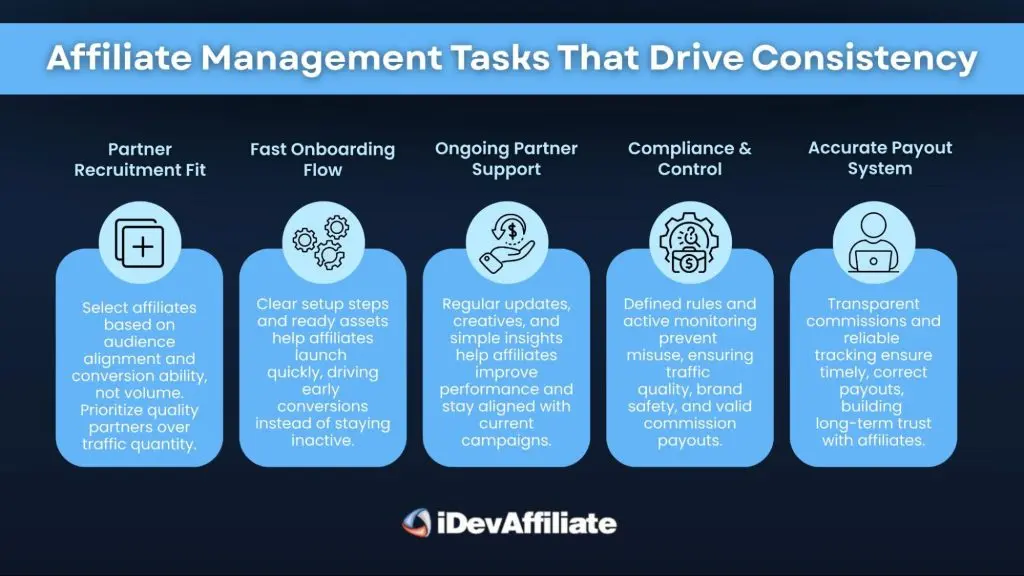
Once the foundation is clear, execution comes down to how well you manage partners day to day. Affiliate programs don’t fail from lack of strategy, they fail from inconsistent operations.
These core responsibilities define how you turn structure into predictable performance.
1. Partner Recruitment And Qualification
Affiliate program management starts with selecting partners who can drive relevant, on-brand traffic.
Strong programs prioritize alignment over volume, filtering affiliates based on audience fit, promotion style, and proven ability to convert rather than just generate clicks.
2. Onboarding And Early Activation
Onboarding determines whether affiliates become productive or remain inactive.
Clear setup steps, accessible assets, and a defined first campaign path help partners reach initial conversions quickly, turning signups into active contributors instead of a stagnant affiliate list.
3. Ongoing Enablement And Performance Support
Consistent output requires continuous support, not one-time onboarding. Providing updated creatives and messaging guidance helps affiliates refine their approach.
Simple performance insights reduce guesswork and keep promotions aligned with your current offers and priorities.
4. Governance And Compliance Control
Affiliate programs need clear rules and active monitoring to stay profitable and brand-safe.
Defined policies around traffic sources, promotions, and disclosures help prevent misuse, while regular oversight ensures that commissions are awarded based on valid, compliant activity.
5. Payment Operations And Payout Accuracy
Reliable payout processes are essential for maintaining affiliate trust.
Clear commission rules, approval timelines, and automated tracking ensure partners are paid accurately, reducing disputes and creating a system where every payout is tied to verified performance.
When responsibilities are clearly defined, execution becomes consistent instead of reactive.
That consistency makes it easier to identify which systems are needed to support tracking, payouts, and partner operations at scale.
Helpful Resource → How to Scale Affiliate Marketing Programs
Tools And Systems That Support Affiliate Program Management
Once responsibilities are defined, the next step is building systems that make execution consistent.
Without the right tools, even well-structured programs become manual, error-prone, and difficult to scale. These systems ensure tracking, communication, and payouts stay accurate as your program grows.
1. Tracking And Attribution Infrastructure
Affiliate tracking systems connect every referral to a verified outcome, ensuring each conversion is assigned correctly.
Tools like iDevAffiliate go beyond basic cookies by linking referrals to customer identity, maintaining attribution across devices, sessions, and longer buying cycles.
2. Reporting And Performance Visibility
Reliable reporting separates raw activity from meaningful performance.
Clear dashboards help you identify which affiliates drive quality conversions, not just traffic, allowing you to track metrics like conversion rates, refund patterns, and time-to-purchase with confidence.
3. Commission Logic And Payout Systems
Commission systems apply predefined rules to calculate payouts based on actual customer actions.
Automated tools ensure commissions adjust for refunds, upgrades, or cancellations, so payouts remain accurate without requiring manual reconciliation or ongoing spreadsheet fixes.
4. Fraud Detection And Validation Controls
Fraud prevention systems monitor for suspicious patterns such as duplicate accounts, abnormal clicks, or inflated conversions.
Platforms like iDevAffiliate include validation layers and audit-ready logs, helping ensure only legitimate referrals are rewarded and disputes can be resolved clearly.
5. Communication Workflows And Asset Management
Centralized workflows and asset hubs make it easier for affiliates to access approved content, links, and promotional guidance.
Keeping materials organized and up to date reduces confusion, helping partners launch campaigns faster and stay aligned with your current offers.
When these systems are in place, affiliate management becomes structured instead of manual.
That foundation makes it easier to move from setup into controlled growth, where execution and testing drive consistent results.
Step-by-Step Framework To Build And Scale An Affiliate Program
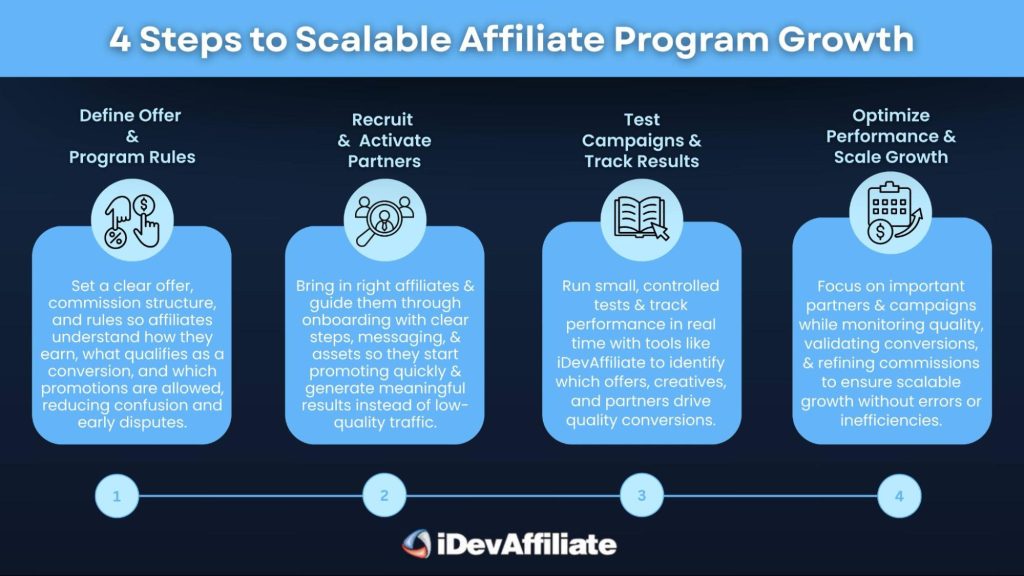
Once your systems are in place, growth comes from execution, not guesswork. Scaling an affiliate program requires structure, testing, and consistent refinement.
The steps below simplify the process into four core stages that drive predictable growth.
Step 1: Define Offer, Commissions, And Program Rules
Start with a clear offer, simple commission structure, and defined program rules.
Affiliates should immediately understand how they earn, what counts as a conversion, and which promotional methods are allowed, reducing confusion and preventing disputes early.
Step 2: Recruit, Segment, And Activate Partners
Bring in the right affiliates, then group them based on how they drive traffic.
Clear onboarding, tailored messaging, and early activation steps ensure partners start promoting quickly and contribute meaningful, incremental value instead of low-quality volume.
Step 3: Launch Tests And Track Performance
Scale through controlled experiments instead of broad changes.
Using platforms like iDevAffiliate, you can track attribution and campaign performance in real time, helping identify which offers, creatives, and partner types consistently drive verified conversions.
Step 4: Optimize, Enforce Quality, And Scale
Focus on what works while maintaining strict quality control.
Monitor performance, validate conversions, and adjust commissions or partnerships as needed to ensure growth stays aligned with profitability, compliance, and long-term sustainability.
When these steps are executed consistently, your affiliate program becomes structured instead of reactive.
That structure is what allows you to scale confidently without introducing tracking gaps, payout errors, or operational friction.
Bottom Line: What Is Affiliate Program Management?
Instant account set up. All features unlocked in base plan. Professional onboarding included.
Create Your Affiliate Program
Affiliate program management is not just about running promotions, it’s about building a system that keeps tracking, payouts, and partner activity consistent over time.
Structure determines everything.
When your program connects referrals to verified users, applies commission rules automatically, and maintains clear operational workflows, affiliate growth becomes stable instead of reactive:
- Identity-based tracking: Keeps attribution intact across devices, sessions, and longer buying cycles.
- Clear commission systems: Ensure payouts reflect real events like refunds, upgrades, and renewals.
- Consistent partner operations: Standardized onboarding, rules, and support reduce confusion and inactivity.
- Audit-ready reporting: Every commission ties back to traceable, verifiable activity.
Together, these elements create a program that doesn’t just generate affiliate activity, it sustains it with accuracy and trust.
Affiliate programs succeed when they are managed like systems, not campaigns, and that shift is what turns unpredictable results into scalable, long-term growth.
Something you can start building today with a free trial of iDevAffiliate.
Frequently Asked Questions (FAQS)
You may also like

How to Set Up an Affiliate Program on BigCommerce

How to Set Up an Affiliate Program on WooCommerce

How to Set Up an Affiliate Program on Shopify

First Steps: 6 FREE Marketing Ideas For Your New Affiliate Program
Create Your Affiliate Program
- Unlimited Affiliates
- Unlimited Commissions
- Built-In SEO Links
- Social Media Sharing
- Affiliate Program Directory
