
How Affiliate Marketing Programs Really Work

Affiliate marketing programs are not just about links and commissions. They are structured systems businesses build to reward partners for measurable results.
If you want a clear answer to what makes them work, here’s what actually matters:
- Business defines rules, rates, and payout terms upfront.
- Clean tracking connects click, conversion, and commission.
- Order-status validation confirms commissions before approval.
- Transparent payout timelines and thresholds prevent confusion.
- Fraud controls protect margins without hidden reversals.
When these pieces are aligned, affiliates promote confidently and businesses scale predictably.
If you are setting up your own program, iDevAffiliate Cloud or the self-hosted iDevAffiliate version gives you direct control over tracking, commission logic, and payout workflows from day one.
Understanding how tracking, approvals, and commission rules connect behind the scenes can change how you build, manage, or promote an affiliate program long term.
Understanding the Structure of Affiliate Marketing Programs
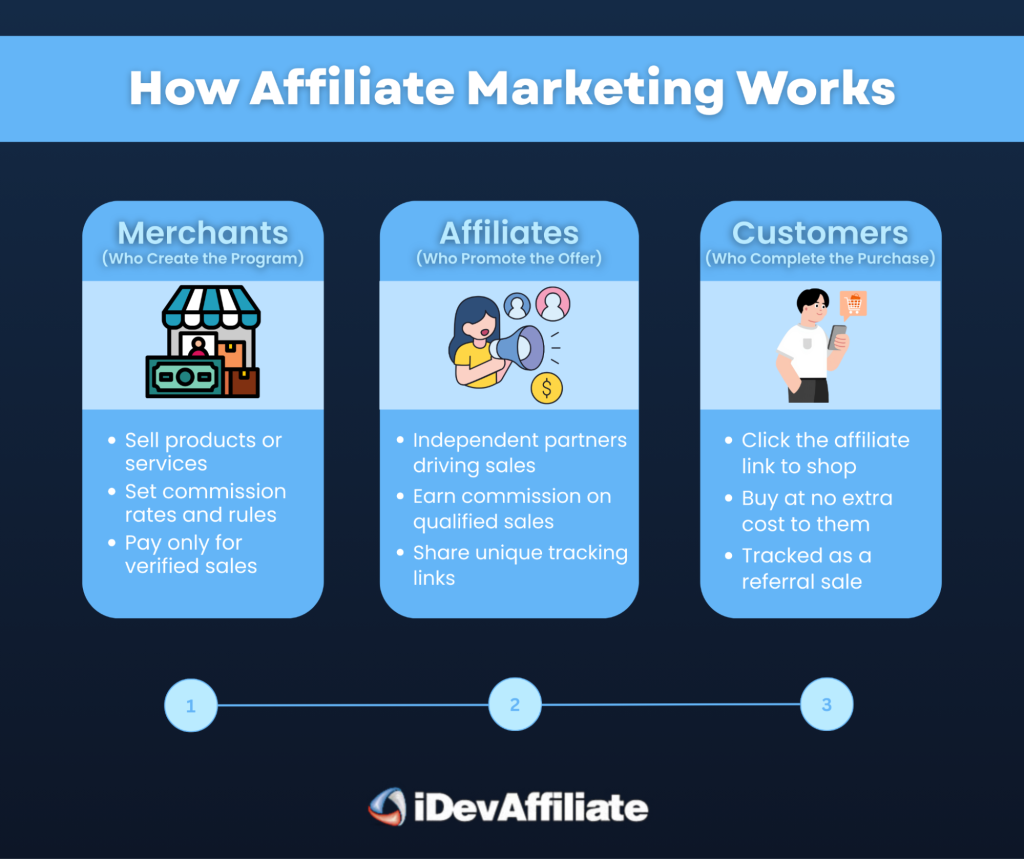
An affiliate program is not just links and commissions. It is a system a business builds to reward partners for measurable results.
When the structure is clear, affiliates know how to promote, and the business knows when to pay.
The Business Operating the Program
Every affiliate marketing program begins with a company offering a product or service.
The business defines the commission rate, what counts as a conversion, how long tracking lasts, and when payouts are released. This is where discipline matters.
Expecting affiliates to interpret vague rules is not realistic. The company must define the terms clearly and support them with reliable tracking software.
The Affiliate Promotion Layer
Affiliates promote using tracked links or coupon codes provided by the business. Mistakes happen when affiliates create their own variations or modify links.
That is why ready-made, tested tracking links are important. When affiliates copy from a trusted source, tracking stays intact.
The Tracking and Attribution System
The tracking software records clicks, matches them to conversions, and applies commission rules. If the tracking system is weak or disconnected from checkout, commissions become inconsistent.
Strong attribution systems do not rely on a single tracking method.
Combining standard cookie tracking with more persistent identifiers, such as email-based tracking, reduces attribution gaps and ensures conversions are consistently credited even when user behavior spans multiple sessions or devices.
The Commission and Payout Workflow
Once a conversion is validated, the system calculates the commission, applies approval rules, and schedules payout.
Order-status triggers, refund handling, and payout thresholds all operate inside this layer.
When these structural pieces work together, affiliate marketing programs operate smoothly. When they do not, confusion replaces confidence.
Step-by-Step: From Program Setup to Recorded Commission
To understand what affiliate marketing programs are, you need to see both sides of the system. A business builds the structure.
Affiliates promote within it. The tracking software connects the activity to payouts. When any step is unclear, commissions break down.
Step 1: The Business Sets Up the Program
The company defines commission rates, conversion rules, cookie duration, approval triggers, and payout timing. Then it installs affiliate tracking software and connects it directly to checkout.
Ready-made tracking links should be generated, tested internally, and organized clearly inside the affiliate portal to prevent avoidable tracking errors.
Step 2: Affiliates Join and Receive Tracking Assets
Affiliates apply, get approved, and receive a unique tracking ID tied to links and coupon codes.
These assets must be copied exactly as provided. If affiliates edit links, remove parameters, or use untested shorteners, tracking can fail.
Providing verified, ready-to-use links protects commissions.
Step 3: Clicks Are Tracked
When a customer clicks the affiliate link, the tracking system records the interaction and stores the referral identifier through cookies or server-side tracking.
This creates the attribution bridge between promotion and purchase. If this connection is lost, the sale may occur but the affiliate will not receive credit.
This is where many affiliate programs quietly break down. Traditional tracking methods rely heavily on cookies, devices, and browser sessions. If a customer switches devices, clears cookies, or returns later through a different channel, that original referral can be lost.
More reliable systems solve this by tying the referral to something persistent, like the customer’s email address, creating a lasting relationship between the affiliate and the buyer that does not disappear after the first click.
Step 4: Checkout Sends Conversion Data
After purchase or signup, the checkout system sends order details, including value, products, and status, back to the affiliate platform.
A clean integration automates this process. Manual uploads or incomplete integrations introduce delays, reporting gaps, and commission discrepancies that reduce trust.
Step 5: Commission Is Logged and Approved
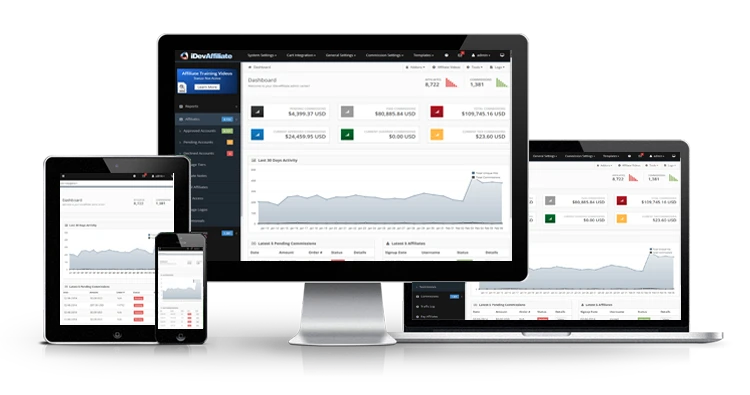
The system calculates commissions based on predefined rules and logs them in the affiliate dashboard.
Most reliable programs hold commissions as pending until the order reaches a verified status like Completed or Shipped.
Only after approval does the payout become confirmed and payable.
When these operational steps are clearly defined and supported by reliable tracking, affiliates know their efforts are being recorded correctly.
The next layer is understanding how those recorded conversions turn into calculated, approved, and ultimately paid commissions.
How Affiliate Commissions Are Calculated and Paid

Once a program is set up and tracking is connected, the next layer is commission logic. This is where misunderstandings happen. Commissions are not automatic promises.
They follow defined rules that determine how earnings are calculated, approved, and released.
When those rules are configured properly inside the affiliate platform, payouts become predictable instead of manual.
Commission Rate Structure
Affiliate programs typically use flat payouts, percentage-based commissions, or product-level rates.
A flat payout offers consistency per sale or lead. Percentage models scale with cart value but may exclude taxes or discounts. Product-level rates matter when margins differ across categories.
iDevAffiliate allows businesses to define commission rates at the product or offer level, ensuring calculations are applied consistently and visible inside the affiliate dashboard.
Performance Tiers and Thresholds
Some programs increase commission rates after affiliates reach defined performance levels. These tiers reward consistent results, but only when qualification rules are clearly structured.
With configurable tier settings and transparent reporting, iDevAffiliate enables businesses to track progress accurately and apply higher rates automatically once thresholds are met.
Order Status Commission Triggers
Reliable programs create commissions based on order status, not just purchase placement.
Keeping commissions pending until an order reaches Completed or Shipped reduces reversals and protects margins.
iDevAffiliate supports order status-based commissioning so businesses avoid premature payouts and unnecessary clawbacks.
Refund and Reversal Controls
Refunds and chargebacks are part of real commerce. Programs must define how long reversals are allowed and how partial refunds affect commissions.
iDevAffiliate includes configurable approval workflows and locking periods, allowing businesses to manage reversals cleanly while maintaining clear visibility for affiliates.
When commission rules are clearly defined and automated, businesses reduce disputes, manual corrections, and payout inconsistencies.
The next priority is ensuring the entire backend, tracking accuracy, payout clarity, and fraud controls, is structured.
Well enough that affiliates see the program as reliable and worth promoting long term.
The Reliability Checklist: Tracking, Payouts, and Fraud Controls
If you want affiliates to take your program seriously, reliability must be visible.
Affiliates promote confidently when they know tracking is accurate, commissions are calculated consistently, and payouts follow clear rules. Legitimacy is not claimed, it is demonstrated through structure.
Clear and Documented Payout Terms
Businesses should define payout schedules, minimum thresholds, approval timelines, and payment methods upfront.
Affiliates should not have to guess when they will be paid or what conditions may reverse commissions. Publishing clear terms inside the affiliate portal signals operational maturity.
When expectations are documented and easy to reference, trust increases and disputes decrease.
Verified Tracking and Conversion Flow
Affiliates trust programs that test their own tracking before inviting promotion.
That means confirming that clicks record properly, checkout sends clean order data, and commissions apply the correct rates automatically.
A properly integrated affiliate system, such as iDevAffiliate connected directly to checkout and order status updates, ensures conversions are recorded without manual uploads or reporting gaps.
Cross-Device and Coupon Attribution
Modern buyers move between devices and may use coupon codes instead of re-clicking links.
Businesses that support both link-based tracking and coupon attribution reduce lost commissions and prevent unnecessary affiliate frustration.
More advanced systems, such as iDevAffiliate, combine these methods with persistent tracking approaches to maintain accurate attribution even when user behavior spans devices or sessions.
Transparent attribution rules also reduce disputes when multiple referral touchpoints exist.
Fraud Monitoring and Commission Holds
Strong programs use structured approval workflows and order status triggers to prevent premature payouts.
Holding commissions until orders reach a verified status protects margins without creating hidden clawbacks.
Fraud monitoring, visible pending states, and consistent status updates show affiliates that the program is managed responsibly.
When businesses combine clear documentation, automated tracking, and structured approval controls, affiliates see the program as stable.
That operational reliability, supported by systems like iDevAffiliate, is what turns promotion into long-term partnership rather than short-term experimentation.
Bottom Line: Affiliate Marketing Programs Run on Structure
Instant account set up. All features unlocked in base plan. Professional onboarding included.
Create Your Affiliate Program
Affiliate marketing programs only work when the system behind them is disciplined.
Tracking must be accurate. Commission rules must be defined. Payout workflows must be predictable. Without structure, even strong offers create disputes and confusion.
Businesses that want long-term affiliate partnerships need more than commission percentages. They need:
- Reliable Tracking Infrastructure: Click-to-conversion attribution connected directly to checkout and order status updates, supported by persistent tracking methods that reduce reliance on cookies and prevent lost commissions over time.
- Order-Status Commission Controls: Pending → approved logic that prevents premature payouts and unnecessary reversals.
- Clear Payout Management: Defined schedules, thresholds, and automated commission calculations.
- Transparent Affiliate Dashboards: Real-time reporting that shows clicks, conversions, pending commissions, and approvals clearly.
- Fraud Detection and Monitoring: Commission holds and validation rules that protect margins without damaging trust.
iDevAffiliate is built around this operational clarity.
With direct integrations, order status commissioning, configurable rate structures, and structured payout management, businesses can run affiliate marketing programs that affiliates trust and confidently promote.
Affiliate marketing programs succeed when the backend is as strong as the offer. Structure creates trust. Trust creates scale.
If you’re a business owner ready to launch your own affiliate marketing program, the right system makes all the difference.
Start your free trial of iDevAffiliate today and see how easy it can be to track referrals, manage affiliates, and automate commissions with a platform built specifically for growing businesses.
Frequently Asked Questions (FAQS)
You may also like

How to Set Up an Affiliate Program on BigCommerce

How to Set Up an Affiliate Program on WooCommerce

How to Set Up an Affiliate Program on Shopify

First Steps: 6 FREE Marketing Ideas For Your New Affiliate Program
Create Your Affiliate Program
- Unlimited Affiliates
- Unlimited Commissions
- Built-In SEO Links
- Social Media Sharing
- Affiliate Program Directory
